Reviews
Toronto, Vancouver and Montreal condo kitchens, where a coffee station fits
A compact coffee station for Toronto, Vancouver and Montreal condo kitchens: counter depth, clearance, named gear and local recycling rules.
What to take away
- A compact coffee station in a Toronto, Vancouver or Montreal high-rise usually gets 40 to 60 cm of usable counter, so depth matters more than width.
- Clearance above the counter and a working outlet decide what you can actually run, not the litre capacity on the box.
- Toronto and Montreal sort coffee station waste under different rules, so check your building's system before you stock up.
- Manual brewers, hand grinders and narrow drip machines fit these kitchens better than most pump espresso machines.
- Buy gear with a CSA or cUL certification mark and check its energy rating before you commit.
What a Toronto, Vancouver or Montreal condo kitchen actually gives you
High-rise kitchens in all three cities share a shape. You get a galley or an L along one wall, a fridge, a sink and a stove, and whatever counter is left over. In a one-bedroom unit that leftover run is often under a metre.
The 2025 Rental Market Report | CMHC tracks apartment and condo rental stock across major centres, including Toronto, Vancouver and Montreal. It is the clearest published picture of how much living space renters in these markets actually get. Read it before you assume you have room for a full coffee bar.
Toronto has the largest concentration of Canadian roasters, cafés and coffee-gear retail, and the country's biggest stock of condo kitchens. That means more gear on shelves and more chance to measure a machine in person before buying.
Vancouver's independent roaster cluster is dense, but the tap water is soft and mineral-poor. Home brewers there often build custom water recipes, which adds a small bottle or a scale to the counter plan.
Montreal brings a strong third-wave café scene and bilingual packaging. Quebec's deposit and recycling rules change what packaging arrives home with you, which affects how much bin space the station needs.
Where the counter usually ends up
Most people put the coffee gear beside the sink or between the stove and the fridge. Both spots look fine until you open a cupboard door or pull out the kettle cord.
Start with planning a coffee station around the sequence of making a drink. Grind, heat, brew, clean. Each step needs a landing spot, and in a condo kitchen those spots overlap.
Counter depth, outlet placement and clearance in high-rise kitchens
Standard Canadian condo counters run about 60 cm deep, but usable depth drops once a backsplash, a window sill or a microwave takes its share. Measure from the wall to the front edge, then subtract anything fixed.
Clearance is the number people forget. A pour-over cone needs room to lift a kettle. A drip machine needs headroom to fill the reservoir and swing the lid. Under a wall cabinet, that headroom disappears.
Outlets are the other constraint. High-rise kitchens often have one usable counter outlet, sometimes on a split circuit with the microwave. Check the breaker panel before you add a 1,500 watt kettle and a grinder to the same run.
The clearance numbers that matter
| Item | Depth needed | Height needed | Notes |
|---|---|---|---|
| Pour-over cone and carafe | 20 cm | 35 cm to lift a kettle | Keep clear of upper cabinets |
| Hand grinder | 8 cm stored | 30 cm while cranking | Store in a drawer |
| Narrow drip machine | 25 cm | 40 cm to open the lid | Needs its own outlet |
| Manual lever espresso maker | 20 cm | 45 cm for the lever arc | Weight matters on a thin counter |
| Immersion brewer | 15 cm | 25 cm | Lightest option |
If your only free surface is a 30 cm strip beside the sink, treat that as the whole station and choose gear that stacks vertically.
Water and power in each city
Vancouver's soft water means less descaling but more need for added minerals if you want a full-bodied cup. Toronto and Montreal water varies by building, so taste it first and decide whether a filter jug earns its counter space.
Appliances sold in Canada carry a certification mark from a recognized body such as CSA Group. Look for it on kettles, grinders and brewers. A cheap import without a mark is a risk you do not need in a rental.
Check Energy efficiency for products - Natural Resources Canada for ratings on compact coffee appliances before you buy. A machine that idles hot all morning costs more than its sticker price suggests.
Sizing a compact coffee station to a rental or condo lease
Your lease and your building rules set limits the product page never mentions. Many Toronto and Montreal condo corporations restrict balcony storage, and some prohibit appliances that trip shared circuits.
Measure three things before you shop. The free counter run, the distance from that run to the nearest outlet, and the height from counter to the underside of any cabinet. Write them down and take the numbers with you.
Weight is the fourth limit. Granite and quartz tolerate a heavy machine. Laminate over particleboard in older rental kitchens does not, especially at the front edge where a lever press puts load.
What renters should avoid
Plumbed-in machines need a water line, which means landlord permission and a plumber. In a condo, that can also mean a corporation approval. Skip them unless you own the unit and plan to stay.
Large hopper grinders hold stale beans and eat depth. A hand grinder or a small conical burr unit does the same job in a third of the footprint.
If you move often, keep the whole station to what fits in one box. That is the real test of a compact setup.
Named compact gear that fits a narrow counter
These are the categories worth comparing, with the trade-offs that matter on a 40 cm counter.
- AeroPress Original or Clear. About 12 cm across, no power needed, and it doubles as a travel brewer. The paper filters store flat.
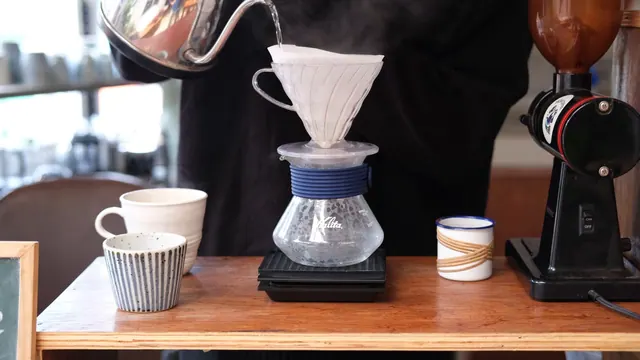
- Hario V60 size 01 with a small carafe. A 01 cone brews one cup and takes less depth than the 02. Pair it with a gooseneck kettle you already own.
- Fellow Stagg EKG kettle. Narrow base, precise temperature control, and it holds a set temperature instead of cycling. It is the tallest item on most condo counters.
- 1Zpresso Q2 or Timemore C3 hand grinder. Both fit inside an AeroPress for storage, which matters when drawer space is the real shortage.
- Flair Neo or Cafelat Robot manual lever. No pump, no boiler, and a small footprint. See our comparison of Manual Espresso Makers for Small Kitchens for how the lever arc affects clearance.
- Technivorm Moccamaster Cup-One or a Bonavita 5-cup. Narrow drip machines for households that want batch brewing without a full-size carafe.
- A compact scale rated for Canadian sale. Measurement Canada sets accuracy rules for scales sold here, so buy from a Canadian retailer with a warranty you can use.
We have run several of these through longer testing, and if you want the best water filter for pour over in a tight setup, that guide covers the shortlist. The pattern holds: fewer parts, less depth, easier cleaning.
Build the station around one brewer
Pick a single primary brewer and let everything else support it. One grinder, one kettle, one scale. That is the whole station.
If you want variety without more hardware, see how coffee stations makers build a tasting flight around the same beans and different methods. It costs nothing in counter space.
For layout options that hide the gear when it is not in use, these small coffee bar ideas cover carts, shelves and drawer inserts.
Toronto, Vancouver and Montreal recycling rules for coffee station waste
Coffee station waste is not one stream. You have paper filters, spent grounds, plastic bags, foil valve bags, capsules and pod packaging, and each city treats them differently.
In Toronto, apartments and condos in buildings with a City collection contract sort organics, recycling and garbage in the building's own system. Check Apartments, Condos & Co-ops - City of Toronto for what belongs in each stream. Spent grounds and paper filters go to organics where the building collects them.
In Montreal, recyclables are containers, packaging and printed materials, sorted at the building or curb depending on the borough. The City's guidance on Recyclables: Containers, packaging and printed materials | Ville de Montréal explains which coffee packaging qualifies. Rinse foil and plastic where the rules ask for it.
Vancouver sits under Recycle BC, a provincial programme rather than a municipal one, so the accepted list differs again. Bilingual packaging is common in Montreal, and the sorting instructions on the back may be the only ones you get.
A short sorting routine
- Empty and rinse capsules and foil pouches before they go in recycling.
- Put spent grounds and paper filters in organics if your building collects them.
- Check whether your building uses City collection or a private hauler, since the rules differ.
- Keep a small lidded bin beside the station so grounds do not migrate to the recycling bag.
- Flatten valve bags only if your municipality accepts them.
One bin for grounds, one for packaging, and the station stays clean without a trip to another room.
A layout checklist before you buy anything
Work through this in order. It takes ten minutes and saves a return.
- Measure the free counter run in centimetres, wall to front edge.
- Measure counter to the underside of the nearest upper cabinet.
- Note every outlet within reach and whether it shares a circuit with the microwave.
- Confirm your building's collection system and which bins you actually have.
- Decide your primary brewer before comparing grinders.
- Check for a CSA or cUL mark on every powered item.
- Confirm the box will fit through your door and into your cupboard.
If two items compete for the same spot, keep the one you use daily. The rest can live in a cupboard and come out for weekends.
A quick worked example
A 45 cm counter run beside a Toronto condo sink, one outlet, and a cabinet 45 cm above. That rules out a tall drip machine with a hinged lid.
A hand grinder, a V60 01, a small gooseneck kettle and an AeroPress fit the run with room to work. Total depth used is under 25 cm, and only the kettle needs power. Everything else stores in the cupboard underneath.
Common questions
How much counter space does a compact coffee station need? Plan on 40 to 60 cm of run and at least 25 cm of depth for the working setup. Storage can sit elsewhere if you keep the daily items on the counter.
Can I run an espresso machine in a condo kitchen? A manual lever machine usually works on a standard counter and outlet. Pump machines with boilers draw more power and need more clearance, so check the circuit first.
Do spent coffee grounds go in Toronto recycling? Grounds belong in organics where your building collects them, not in the recycling stream. Check your building's system before you assume.
Does Montreal recycling accept coffee capsules? It depends on the material and the sorting instruction on the packaging. Empty and rinse them, then follow the City's list for containers and packaging.
Why does Vancouver water change what gear I need? Soft, mineral-poor water brews differently and pushes some home brewers to add minerals. That adds a small bottle and a scale to the counter plan.
Do I need a certified appliance in Canada? Yes. Powered gear sold here should carry a recognized certification mark such as CSA or cUL. It matters for insurance and for basic electrical safety in a rental.