Guides
Planning a coffee station starts with the sequence, not the shelf
How to plan a coffee station in a small kitchen: choosing the surface, sequencing the movements, handling water and grounds, and keeping it clean.
A coffee station is not furniture. It is two feet of counter where a sequence of movements has to happen the same way every morning, before anyone is awake enough to improvise. Plan the sequence and the shopping list falls out of it.
What to take away
- Plan the movement, not the layout. Anything you reach for twice belongs inside one arm sweep.
- Water and grounds make the mess, so decide where each goes before buying anything.
- Cleaning is a design constraint. Surfaces you cannot wipe will not be wiped.
- A station on a tray lifts off the counter, which is what makes it survive a small kitchen.
Start with the sequence, not the shelf
Write out the eight or nine things you do, in order: fill kettle, switch on, weigh beans, grind, fold filter, rinse, dose, pour, discard grounds. Now count how many times you cross the kitchen. Every crossing is a chance to spill, forget, or wake someone up.
The morning sequence
- Fill kettle
- Switch on
- Weigh beans
- Grind
- Fold filter
- Rinse
- Dose
- Pour
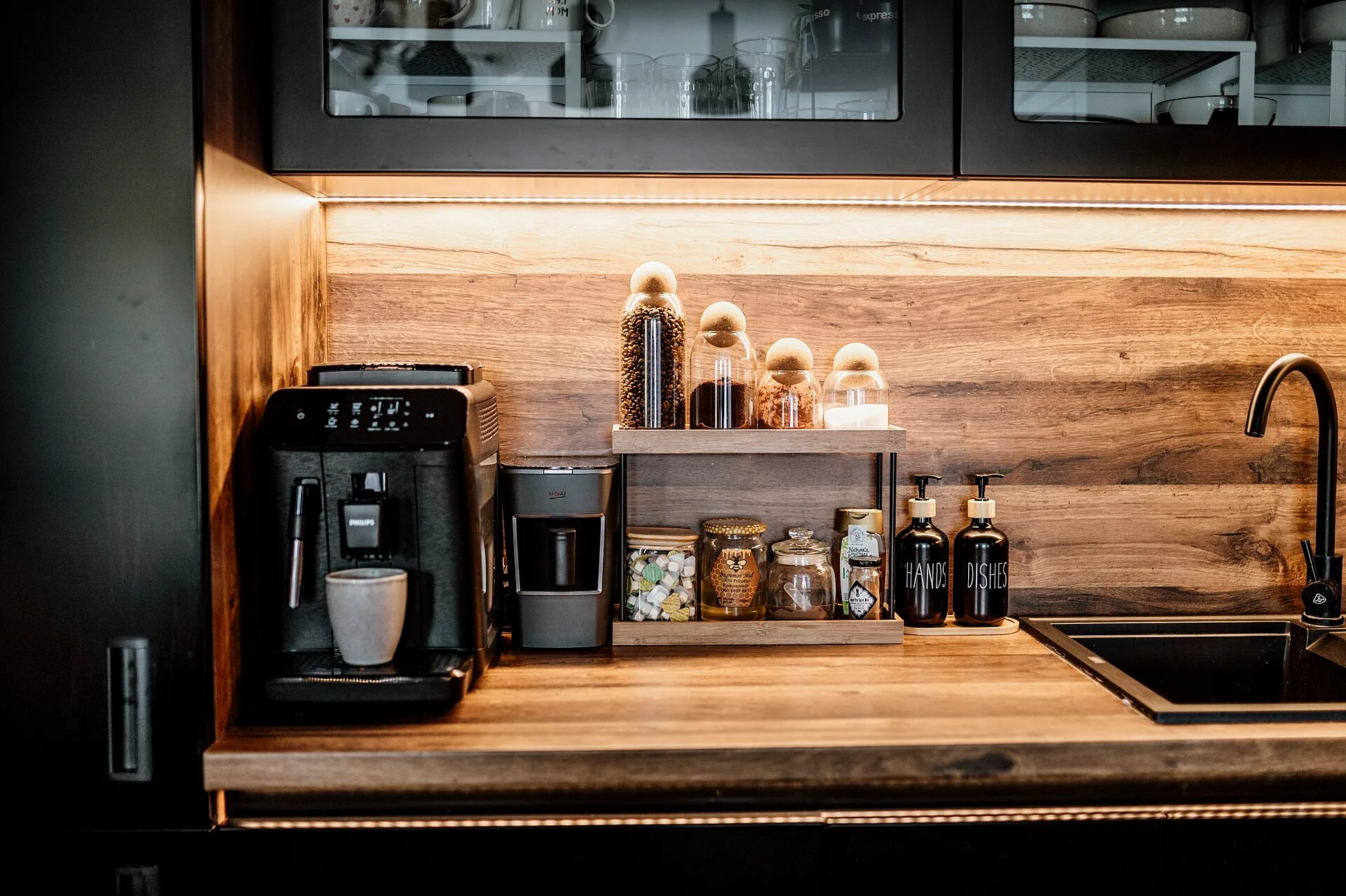
Get that count to zero or one. Put the kettle next to the outlet, the grinder next to the kettle, the beans above the grinder, and the bin within reach of the brewer. Everything else lives in a cupboard.
Then plan the outlet itself. Most electric kettles come with a cord of about two to three feet, so the kettle has to sit within that of a socket. Run the cord behind the counter edge, not across the work zone.
The surface itself
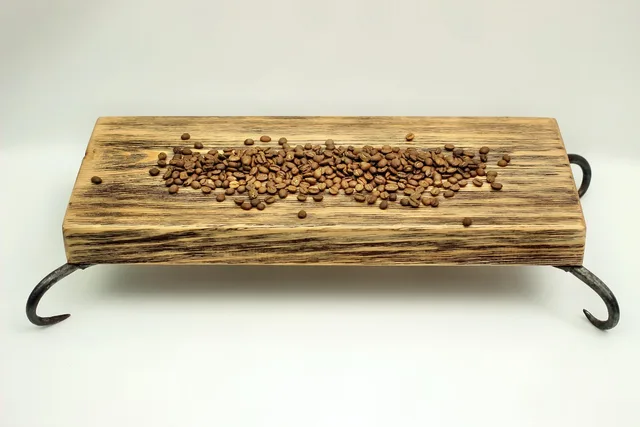
You need about 24 inches of clear, wipeable counter. If it is a wooden top, how the piece was dried decides whether it stays flat beside a kettle. In order of what matters:
- Heat resistance. A kettle base and a hot dripper sit here every morning.
- Wipeability. One pass with a cloth should clear grounds and milk.
- Few seams. Water and crumbs collect in joints, so fewer joints means less work.
- Water tolerance. Standing water must not swell, stain, or lift the surface.
What the surface must survive
- Heat tolerancekettle base and hot carafe
- Water tolerancesomething gets wet daily
- A lip or traycontains spilled grounds
- Heightelbow above the brewer
Material follows that order. Butcher block is warm and repairable, and it needs oiling and drying after a spill. Quartz and sealed stone take water and heat with almost no care. Laminate is the cheapest, and it survives if you wipe it and set hot vessels on a trivet.
Water, and whether yours needs anything done to it
Brewing water is mostly a taste question, not a safety one. Water that is safe to drink can still taste of chlorine, or leave scale in a kettle.
Does your tap water need work?
Taste tap water cold
Fine -> brew with it
Chlorine -> carbon filter or jug overnight
The EPA sets non-enforceable secondary standards for aesthetic problems like taste, color and odor, covering fifteen contaminants that are not health threats at those levels but do make water unpleasant. Chloride, iron, manganese, total dissolved solids and pH are all on that list, and all are things you can taste in a light roast.
So taste your tap water cold. If it is fine, brew with it. If it tastes of chlorine, a carbon filter or a jug left uncovered overnight handles most of it. Do not brew with softened water from an ion exchange softener, which trades hardness minerals for sodium and makes flat coffee.
Grounds, drips and the daily wipe
Two rules keep a station from becoming a science project. Knock spent grounds into a lidded bin, not a loose pile. Wipe the surface while the kettle is still hot, since you are standing there anyway.
A commercial counter does the same job with a written closing routine and someone accountable for it. That is the one habit worth copying at home.
That daily wipe is sanitizing, not disinfecting. Sanitizing reduces bacteria to safe levels on surfaces that touch food, using a chemical agent or hot water. Disinfecting is for cupboards and other surfaces that never meet food.
At a coffee station, hot soapy water and drying does nearly all the work. The parts needing real attention stay damp: the kettle interior, the grinder chute, and anything with a rubber gasket.
Storage above the station
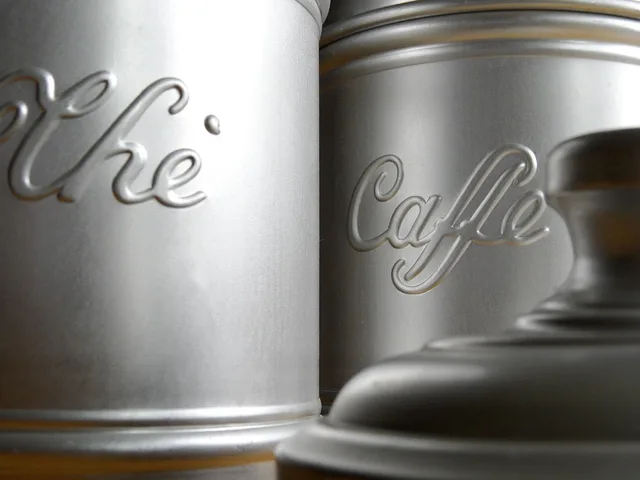
Beans go in an opaque sealed container at room temperature, near the grinder. Filters somewhere dry and flat. Cups within reach. What does not belong is a six-month backup supply, because storage conditions decide how long it stays worth drinking.
Build it cheap first
Set up a version with a tray, a bin, and whatever you own. Live with it two weeks and note every irritation. Then spend money on exactly those, a shorter and stranger list than the one you would have written in advance. Once the layout is settled, the component choices get easier.
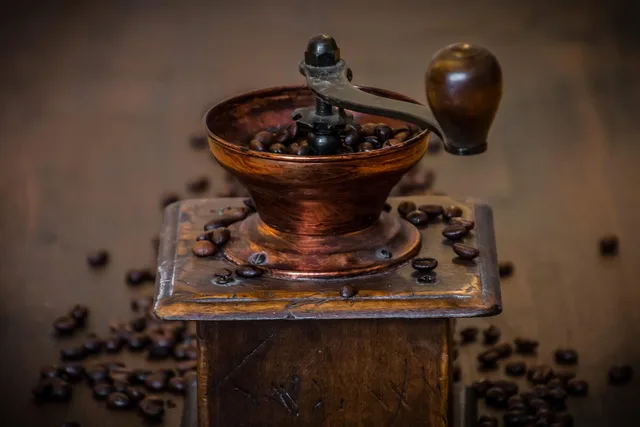
A concrete starting point is a rimmed tray, a lidded bin, a digital scale, a plastic dripper and paper filters. Typical spend is forty to sixty dollars for those, and a hand grinder adds forty to two hundred depending on burrs and build.
Common questions
Does the station need its own outlet?
Should I plumb in a water line?
What about noise?
How much counter do I really need?
In this guide
- What to look for when buying coffee station gear: the parts worth your timeHow to judge the parts of a coffee station before buying: grinder retention and static, kettle shape, filter fit, water treatment, and what to skip.
- How a coffee station stand is built, and how to judge oneWhat small workshops actually do to make coffee station stands and trays, why wood moisture governs the result, and how to judge a piece before buying.
- Coffee station storage habits, compared for how well they hold flavorHow to store coffee at a home station: what oxidation actually does to aroma, why humidity matters more than people think, and what containers earn their place.
- Running a simple tasting at your own home coffee station, step by stepHow to run a simple tasting at your own coffee station: what to set up, how much training you actually need, and what your palate can and cannot resolve.