Reviews
Part of Independent coffee roasters explained: where the value in a bag actually comes from
Independent coffee brands, protected: storage rules from green bean to bag
How coffee is protected from oxidation along the chain: green bean storage, packaging barriers, and what any of it means for the bag in your kitchen.
Coffee spends most of its life in storage. Months as green beans, weeks in a bag, days in your cupboard. Each stage has a way of going wrong, and understanding the chain explains why some bags arrive already tired.
What to take away
- Green coffee oxidizes in storage, and the packaging used determines how fast.
- Higher storage temperature accelerates lipid oxidation measurably.
- Roasted coffee packaging is an oxygen barrier problem, and foil is not the only solution.
- Your part of the chain is the shortest and the easiest to get right.
Green coffee is stored for months
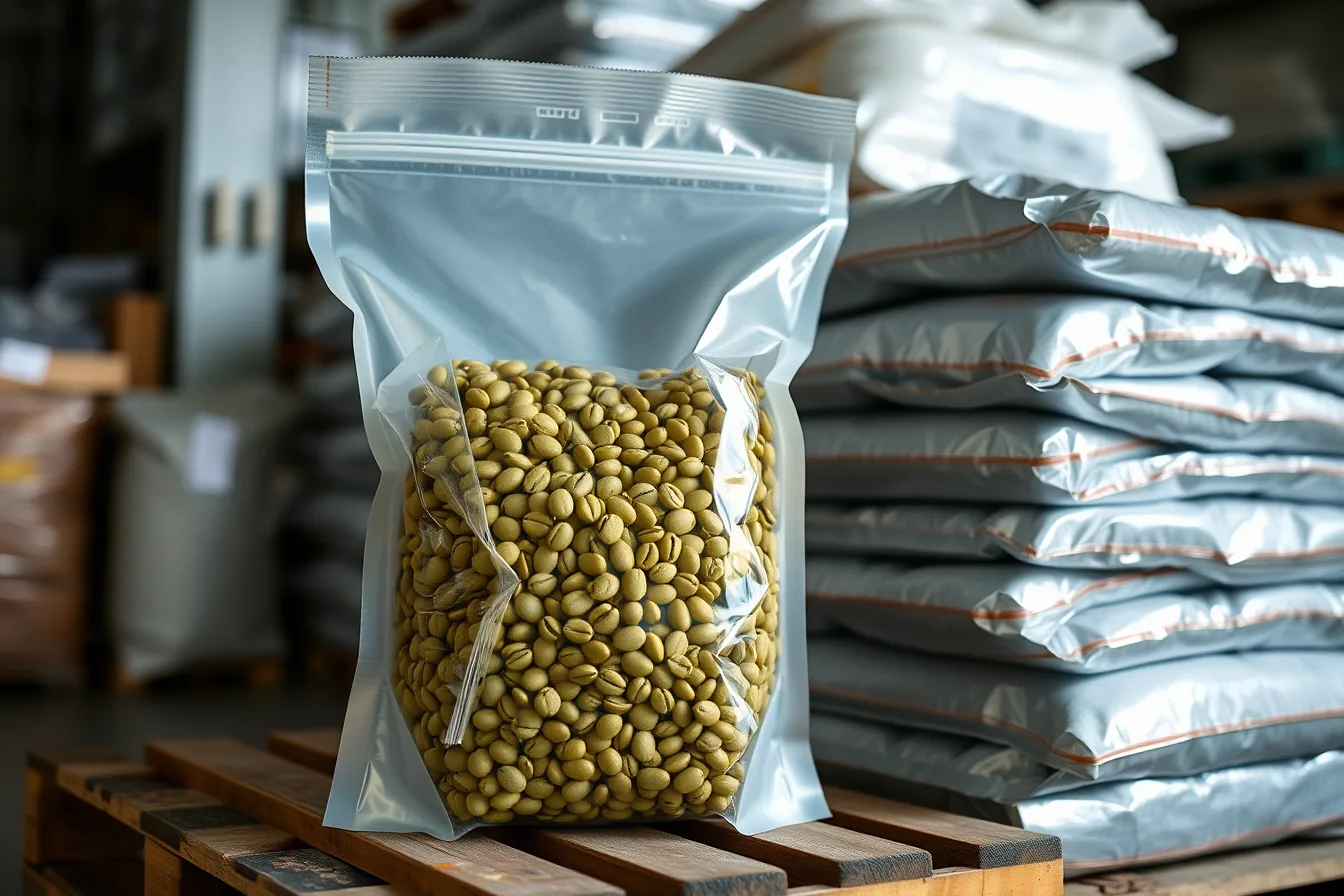
Before green coffee reaches you, it typically sits for months. Research on green arabica under accelerated storage at 30, 40 and 50 degrees tested three packaging types: plastic woven, low-density polyethylene and hermetic bags.
That research found higher temperatures and longer storage produced greater lipid oxidation across acid value, peroxide value and related measures. Hermetic packaging was best for maintaining quality.
The study notes that farmers and roasters commonly store green beans for six months to a year before roasting. Quality can quietly leave in that long window, before a roaster's skill matters.
A careful roastery answers by sampling and cupping the green before buying it, the step most often skipped under pressure.
Roasted packaging is an oxygen problem
Once roasted, oxygen and moisture are the enemy, and aluminum foil laminates work well but are not easily recyclable. Alternatives are being tested seriously.
A twelve-month study compared a recyclable polypropylene multilayer coffee pod film with an aluminum-containing standard at 25 and 40 degrees. The film gave lower headspace oxygen at 25 degrees, with no differences in volatile compounds, pH, titratable acidity or consumer acceptability, and material weight was lower.
The relevant conclusion for a buyer is that a bag's material is not a reliable quality signal by itself. What matters is whether the barrier works and whether the bag is sealed properly. The same holds for everything else at a coffee bar, where a tin and a plastic bottle hold syrup for very different lengths of time.
Your part of the chain
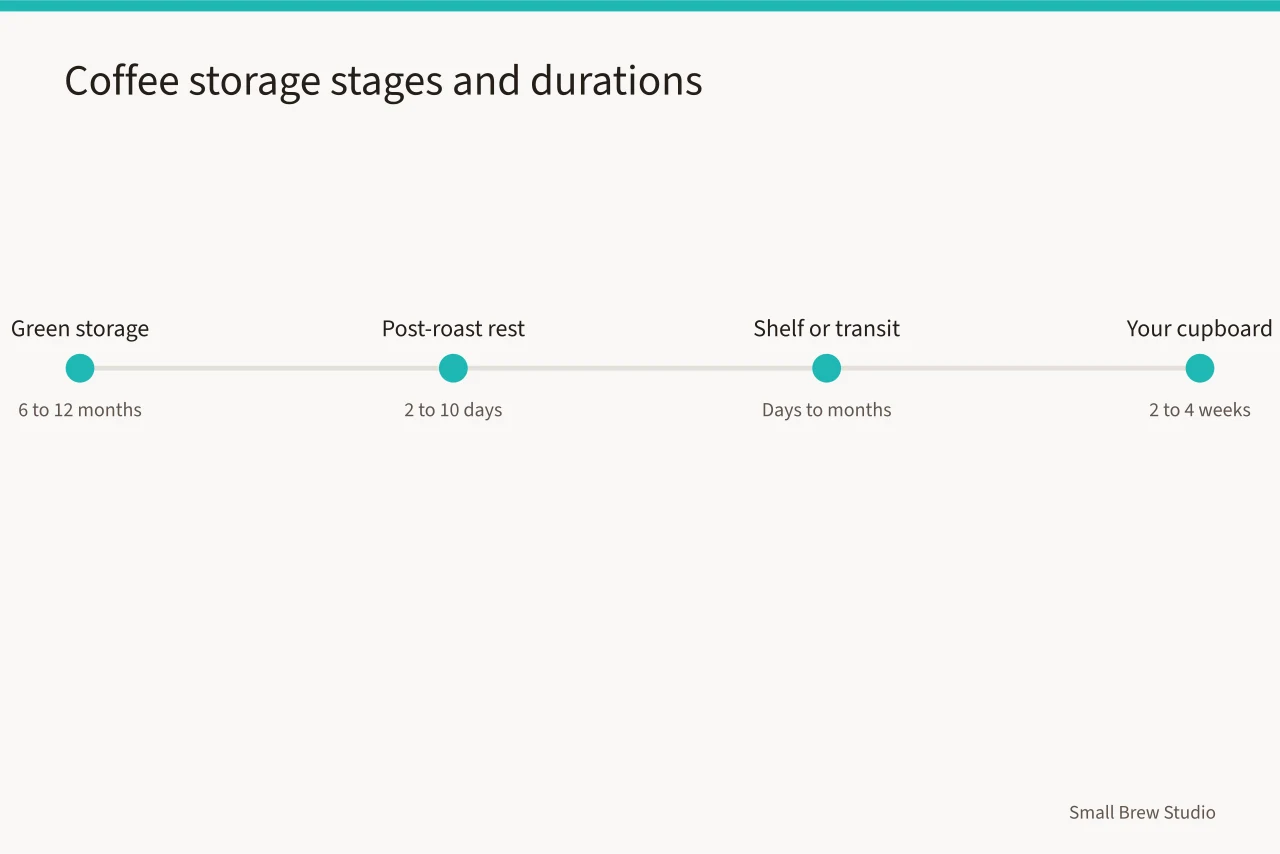
| Stage | Who controls it | Typical duration |
|---|---|---|
| Green storage | Producer, importer, roaster | 6 to 12 months |
| Post-roast rest | Roaster | 2 to 10 days |
| Shelf or transit | Retailer or courier | Days to months |
| Your cupboard | You | 2 to 4 weeks |
Yours is the shortest stage and the one you can make nearly perfect. The rules are simple: airtight, opaque, room temperature, away from the stove, whole bean until the moment of grinding.
The one thing worth changing
Buy smaller bags more often. It removes the last third of every bag from the equation, which is where most staleness is actually consumed. It also means a roaster's freshness advantage is not wasted in your cupboard, which is the main reason to buy from a small roaster in the first place.
If you must buy in quantity, split it into weekly portions on arrival and seal each separately. Opening one bag every morning for a month lets a little fresh air in each time, and the last third of that bag is measurably duller than the first.
The difference between splitting and not splitting is the difference between a coffee you enjoy for a month and one you tolerate for three weeks. It shows up immediately if you set the first week against the last in a proper comparison.
Common questions
Does a one-way valve mean the bag is fresh? It means the bag is designed for coffee that is still degassing. It is a good sign, not a date.
Are recyclable bags worse at protecting coffee? Not necessarily, as the pod film work above shows. Judge the seal and the barrier, not the material name.
Should I decant coffee into a canister? Only if the canister is airtight and opaque. Otherwise the original valve bag, rolled and clipped, is better.
Does green coffee go stale? Slowly, and yes. It oxidizes and loses quality over months, faster in warmth.