Features
Calgary and Edmonton pour-over brewing compared, altitude, dry air, static
Calgary pour-over brewing runs on lower boiling point and dry air, so grind, water and static need local tweaks versus coastal city recipes.
What to take away
- Calgary pour-over brewing starts with a lower boiling point, so water hits the bed cooler than it does in Vancouver or Halifax.
- Edmonton dry indoor air builds static in the grinder, which changes retention and the dose that actually reaches the dripper.
- Grind setting adjustments in Alberta usually mean going finer in Calgary and coarser in Edmonton's winter kitchens.
- Fix water first, then grind, then pour structure when a cup tastes flat.
- A simple starting recipe: 15 g coffee, 250 g water, medium-fine grind, 2:30 to 3:00 total brew time.
Why Calgary pour-over brewing behaves differently from the coast
Calgary sits about 1,045 metres above sea level. Vancouver and Halifax sit near sea level. That gap changes the water, the air in your kitchen and how fast a pour-over drains. Coastal brewers work with dense air and a boiling point close to 100 C. Calgary brewers work with thinner air and water that boils lower.
Water temperature is the first variable people notice. If you heat water to a rolling boil in Calgary, it is already cooler than a rolling boil in Victoria. That changes extraction before you touch the grinder. The same bean, the same ratio and the same pour can taste thinner here.
Dry air is the second difference. Coastal cities are humid most of the year. Calgary and Edmonton are dry, and indoor humidity drops further once furnaces run. Dry air affects static, chaff and how grounds behave in the filter. It also affects how quickly a paper filter dries between pours.
You can check current conditions and seasonal norms for either city through Weather, climate and hazards - Canada.ca. The pattern matters more than any single day. A dry cold snap in January is a different brewing environment from a rainy week in June.
Pour-over brewing is a percolation method: water passes through a bed of coffee and a filter, and the variables are grind, water temperature, ratio, agitation and time. Those variables are covered in general terms on Drip coffee - Wikipedia and Coffee preparation - Wikipedia.
The Alberta twist is that altitude and dry air shift the useful range for each one.
Altitude in Calgary and what it does to boiling point and extraction
At Calgary's elevation, water boils at roughly 96 to 97 C, depending on the day's pressure. That is not a small footnote. It means the hottest water available at a normal boil is already several degrees below what a sea-level recipe assumes.
Most pour-over recipes written for coastal cities assume water just off the boil, around 92 to 96 C at the slurry. In Calgary, water straight off the boil may be near that range, so the usual advice to let the kettle sit for 30 seconds can push you too cool. You may need to pour closer to the boil.
Lower boiling point also means less thermal mass in the slurry. The bed cools faster because the room air is dry and the water starts cooler. A thin-walled dripper loses heat quickly. A preheated dripper and a preheated carafe help more in Calgary than they do in Vancouver.
Extraction is a balance of temperature, time, grind and agitation. Drop the temperature and you slow the rate at which acids, sugars and bitter compounds dissolve. If everything else stays the same, the cup tastes flatter and sweeter in a dull way, not brighter.
The fix is not always more coffee. Often it is hotter water, a finer grind, or a slower pour that keeps the bed temperature up. Change one variable at a time so you can taste what a grind change does before you change the next thing.
Edmonton dry indoor air, static and grinder retention in winter
Edmonton's indoor air in winter is dry. Furnace heat drops relative humidity inside a home well below summer levels. That dry air is the main cause of Edmonton dry air coffee static. Grounds cling to the grinder chute, the catch cup and the sides of the filter.
Static changes your dose. If 15 g goes in and 14.2 g comes out, the missing coffee is stuck in the grinder. Your ratio is now off, and the next brew starts from a different place. This is grinder retention, and it gets worse in a dry Edmonton January than in a damp Vancouver November.
Burr grinders handle this differently from blade grinders. A burr mill crushes beans between two burrs and produces a more even particle size, which is why it is the standard for pour-over. The mechanics are described on Burr mill - Wikipedia.
Even good burr grinders hold some grounds, especially in the chute and around the exit.
A few habits reduce static. Let the grinder sit for a minute after grinding so the charge dissipates. Tap the grinder body before you open it. Use a single spritz of water on the beans before grinding, a common trick that cuts static in dry rooms.
Weigh what actually lands in the filter, not just what you put in the hopper.
Filter behaviour changes too. Dry paper filters can hold a static charge and pull fines to the sides. Rinsing the filter with hot water solves two problems: it removes paper taste and it kills the static. In Edmonton, rinse the filter right before you brew, not ten minutes earlier.
Grind setting adjustments for Calgary and Edmonton kitchens
Grind setting Calgary coffee depends on two things: the lower boiling point and the drier air. Cooler water extracts more slowly, so Calgary brewers often need a finer grind than the same bean would need in Toronto. Finer particles give more surface area, which offsets the cooler slurry.
Edmonton in winter is the opposite pressure. Very dry air and static push fines around, and a grind that is too fine can clog the filter and stall the drawdown. Edmonton brewers often go one or two steps coarser in January than they would in July, then adjust for taste.
Start from a medium-fine grind, similar to table salt. If the brew drains in under two minutes and tastes sour, go finer. If it drains past four minutes and tastes bitter or dry, go coarser. Keep the dose and water weight fixed while you test.
A burr grinder with numbered settings makes this easier, because you can return to a known point. Write down the setting, the dose and the total time. After a few brews you will have a local baseline for your kitchen, not a number copied from a coastal recipe.
Altitude also affects how you judge the grind by feel. In Calgary, a grind that feels right between your fingers may still be too coarse in the cup, because the water is cooler. Trust the taste and the timer more than the touch test.
Pour-over variables worth changing first when the cup tastes flat
Flat coffee usually means under-extraction. Before you buy new beans or a new dripper, work through the variables in order. The stages of a brew, from bloom, first pour, and drawdown, give you a map of where the problem might sit.
- Check the water. Alberta tap water varies by city and by season. If it tastes flat or heavily chlorinated, use filtered water. A good filter is covered in Best Water Filter for Pour Over setups for small kitchens.
- Check the ratio. Start at 1:16 coffee to water, then adjust. The right pour over ratio for one cup is a useful reference point before you blame the grind.
- Check the grind. Go one step finer and taste again. In Calgary, finer is often the answer. In Edmonton's dry winter, check retention first, then adjust.
- Check the temperature. In Calgary, pour closer to the boil. In Edmonton, preheat the dripper and carafe so the slurry does not crash.
- Check the pour. A fast, heavy pour raises agitation and can push fines into the filter. A slow, steady pour keeps the bed even.
Worked example: a Calgary brewer uses 15 g coffee, 250 g water at 96 C, medium grind, and gets a 2:10 brew that tastes thin and sour. The fix is not more coffee. Go one step finer and pour immediately off the boil. The next brew runs 2:45 and tastes sweeter and fuller.
A Calgary versus Edmonton pour-over starting recipe
The table below gives a starting point for each city. Treat it as a baseline, then adjust for your grinder, your water and the season.
| Variable | Calgary | Edmonton (winter) |
|---|---|---|
| Coffee | 15 g | 15 g |
| Water | 250 g | 250 g |
| Water temperature | Just off boil, about 96 C | Just off boil, about 96 C |
| Grind | Medium-fine | Medium |
| Filter | Rinse with hot water | Rinse with hot water, brew immediately |
| Target time | 2:30 to 3:00 | 2:30 to 3:00 |
| Watch for | Cool slurry, slow extraction | Static, retention, stalled drawdown |
Use the same bean and the same water for both cities if you want a fair comparison. If you brew in both places, keep two grind settings in your notes. The Calgary setting will usually be finer. The Edmonton winter setting will usually be coarser and needs a retention check before you trust the dose.
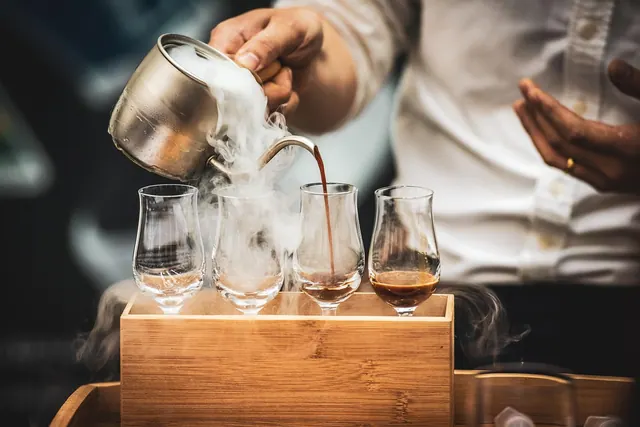
A useful exercise is a tasting flight around pour over methods, brewed side by side with one variable changed. Taste the Calgary-style brew against the Edmonton-style brew and note which one is sweeter, which is brighter, and which finishes cleanly. That tells you more than any single recipe.
Checklist for the first brew in a new Alberta kitchen:
- Weigh the beans and the water.
- Rinse the filter with hot water.
- Preheat the dripper and carafe.
- Grind, then weigh what lands in the filter.
- Pour the bloom, wait 30 to 45 seconds.
- Finish the pour and note the total time.
- Taste, then change one variable next time.
Common questions
Why does my Calgary pour-over taste weaker than the same recipe in Vancouver? The water boils cooler at altitude, so the slurry extracts less. Pour closer to the boil or go one step finer on the grind.
Does Edmonton's dry air really change my coffee? Yes. Static in dry indoor air makes grounds stick to the grinder, which lowers the dose that reaches the filter. Weigh the output, not just the input.
Should I use a different grind in winter? Often yes. Dry air and static can stall a fine grind, so many Edmonton brewers go one or two steps coarser in winter and adjust by taste.
What water should I use in Alberta? Filtered water is the safe default, because tap water varies by city and season. If the cup tastes flat or chemical, change the water before changing the grinder.
How do I know if my grind is right? Use time and taste. A 2:30 to 3:00 brew that tastes sweet and balanced is close. Sour and fast means finer. Bitter and slow means coarser.
Do I need a special kettle or scale in Alberta? No, but a scale matters more than a gooseneck kettle. Weigh beans, water and output so altitude and static do not quietly change your ratio.
![ESA astronaut Samantha Cristoforetti as Captain Janeway drinks coffee in the Cupola. "Coffee: the finest organic suspension ever devised." [ 1 ] Fresh espresso in the new Zero-G cu. Five coffee brewing fixes worth trying before you blame the beans](/covers/coffee-brewing-mistakes-ideas-worth-trying-640.webp)