Rules
Inside pour over: bloom, first pour, and drawdown at each brewing stage
A stage by stage account of a pour over brew, from the bloom to the drawdown, and what you can actually change at each point in the process.
A pour over takes about three minutes and passes through four distinct stages. Knowing what happens in each one tells you which stage to change when the cup is wrong, instead of altering everything and learning nothing.
What to take away
- Brew method is the largest single source of chemical variation between coffees prepared from similar beans.
- The bloom is degassing, not extraction, and skipping it changes how the rest of the brew flows.
- Most of what you taste is dissolved in the first half of the pour.
- The color of the finished cup responds to roast level and brew temperature, so it is a rough gauge you can read for free.
Stage one: the bloom
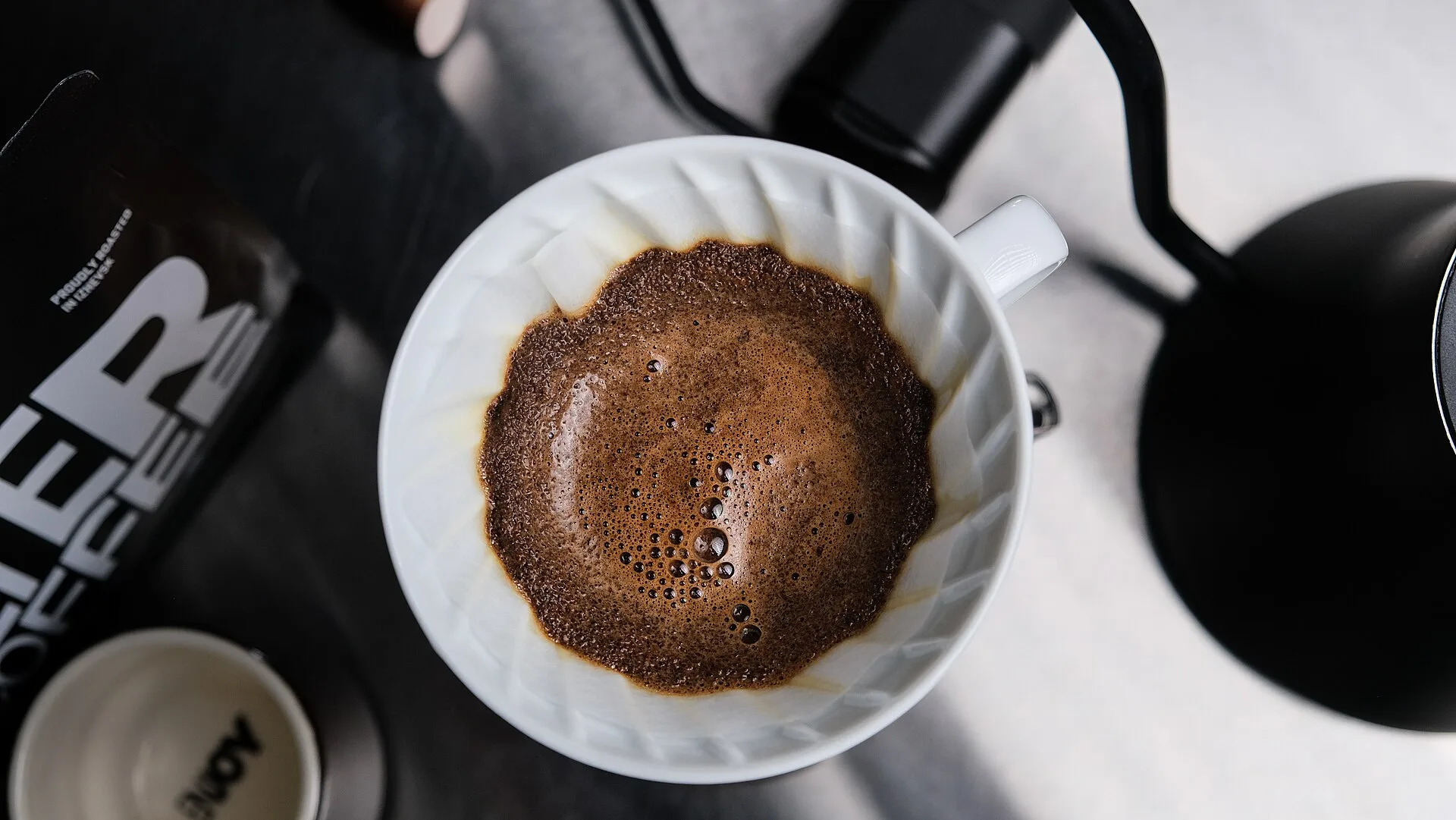
Fresh roasted coffee holds carbon dioxide. Wet it and the gas comes out, lifting the bed and forcing water around the grounds rather than through them. Pour roughly twice the coffee weight in water and wait thirty to forty-five seconds.
Fresh coffee blooms vigorously. Coffee three weeks old barely moves. That is a free freshness test you run every morning. It only works if you know where you are in the bag, so write the roast date on it in marker when you open it.
Stage two: the first pour
This is where most of the soluble material leaves the grounds. Pour in the center, spiral outward, stop before the water reaches the paper. Wet every particle at roughly the same time, because particles wetted late extract less.
Agitation belongs here and nowhere else. A gentle swirl or a single stir evens the bed. Stirring later compacts fines and slows the drawdown. The mechanism has been measured directly: a larger fines fraction lowers the permeability of the bed, which is why a commercial counter treats grinder choice as a flow question.
Stage three: maintaining the level
Keep the water level roughly steady rather than letting it drain and refilling. A bed that drains dry between pours channels: water finds a path and stops touching the rest of the coffee. The result is over-extracted along the channel and under-extracted everywhere else, which tastes both harsh and thin.
Stage four: the drawdown
The last water passes through and the bed settles flat. Time this. Drawdown time is the most useful number in pour over, because it summarizes grind, dose and pour technique in one figure. A drift from three minutes to four means something changed.
| Stage | Duration | What you control |
|---|---|---|
| Bloom | 30 to 45 s | Water volume, wait time |
| First pour | 45 to 90 s | Pour rate, coverage, agitation |
| Maintain | 60 to 90 s | Level, pour rate |
| Drawdown | 30 to 60 s | Nothing, only observe |
Why the method matters more than you expect
A study profiling 76 coffee brews across different methods, roast levels, species and caffeine types found that brew method accounted for the largest share of chemical variability among the factors examined.
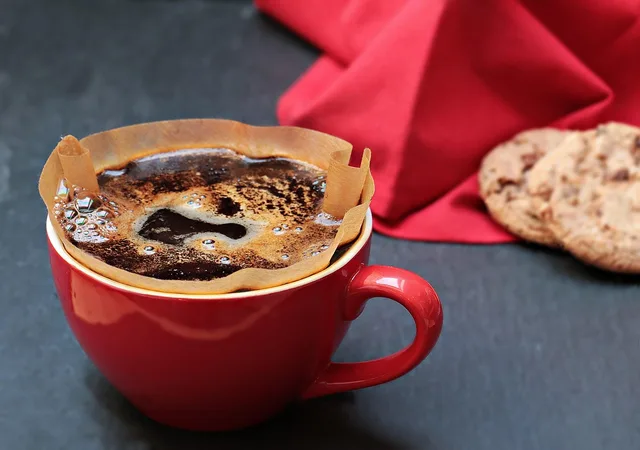
You can read some of the result by eye. A study brewed coffees from three origins at three roast levels and three temperatures, all diluted to exactly two percent dissolved solids so concentration could not confound the result. It found that roast level and brewing temperature both significantly affected the color of the finished beverage.
Color is no precision instrument at home, but a cup that suddenly looks different signals change.
Fixing a bad cup, by stage
Sour and thin means the extraction did not go far enough: grind finer, or slow the pour. Harsh and drying means it went too far: grind coarser, or pour faster. A drawdown that stalls means the bed clogged: grind coarser and pour more gently, and stop stirring late.
Every fix here is a grind change or a pour change. Temperature and the brewer do not appear, which is why the order in which you adjust things matters so much.
If the same fix stops working from one bag to the next, the variable that moved is upstream of your kettle. In that case, the storage conditions the beans have been kept in are the usual suspect.
Common questions
Does the bloom need twice the coffee weight?
Should I stir the bloom?
Does pouring in circles matter?
Why does my drawdown time drift?
In this guide
- Foods that actually pair well with a plain, unsweetened pour overWhat to eat and drink around a pour over, how caffeine sensitivity shapes preference, and how many cups a day the serving sizes actually allow.
- Which words on a coffee label actually predict a good pour over?How to read a coffee bag when you brew pour over: which words predict the cup, which shift your expectations, and why roast profile matters most.
- How to Read Origin and Process on a Pour Over SubscriptionPour over methods reviews are outside this guide; learn to read origin, processing, and drying details on a coffee subscription card.
- How to build a tasting flight around pour over: the honest pictureHow to run a pour over flight that isolates one variable: choosing the axis, holding the brew constant, and using roast color as a rough check.
- Coffee bag origin stories: how to tell checkable details from stagingHow to read coffee bag origin stories: which details name real processing choices, which are atmosphere, and three questions to ask a roaster.