Reviews
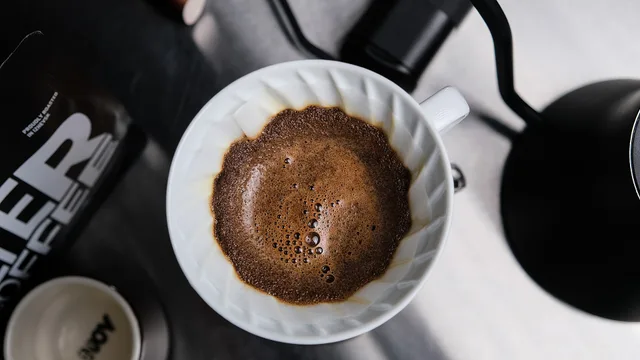
Part of Inside pour over: bloom, first pour, and drawdown at each brewing stage
How to build a tasting flight around pour over: the honest picture
How to run a pour over flight that isolates one variable: choosing the axis, holding the brew constant, and using roast color as a rough check.
A pour over flight is three cups where exactly one thing differs. The method is unusually well suited to it, because you can brew three small cones in a row with the same kettle and the same technique.
What to take away
- Brewing is the last stage that shapes aroma, which is why holding it constant is the whole discipline.
- Roast color is a usable rough gauge, and roast profiles converge onto a common color path.
- Small cones, brewed consecutively, are the practical format.
- Note drawdown time for each cup. It is the number that makes a flight repeatable.
Why the brew has to be held still
Brewing sits at the end of a long chain, and it has the last word. A review of coffee metabolomics describes brewing as the last step of coffee post-harvest processing to affect aroma and flavor, with some metabolites endogenous to the seed and others generated during roasting and brewing, including furans, pyrazines and melanoidins.
That is the argument for rigor. If your three cups differ in pour technique, the flight is measuring your hands, not the coffee.
Choose one axis
- Origin.
- Three coffees, same roaster, same roast level, same recipe.
- Roast level.
- One origin at light, medium and dark.
- Process.
- Washed, natural and honey from one origin.
- Grind.
- One coffee at three settings.
- Age.
- Same coffee at one week, three weeks and six.
For pour over, origin and roast level are the most rewarding, because the method shows both clearly. Getting three comparable origins without buying five bags and letting four go stale is most of the case for a subscription.
Five flight axes compared
Axis
- Origin
- Three coffees
- Roast level
- Light, medium, dark
- Process
- Washed, natural, honey
- Grind
- Three settings
- Age
- 1, 3, 6 weeks
What varies
- Origin
- Yes
- Roast level
- Yes
- Process
- No
- Grind
- No
- Age
- No
Best for pour over
- Origin
- Roast level
- Process
- Grind
- Age
Use color as a rough check
If roast level is your axis, you can sanity check what you were sold.
Research covered seven roast profiles of identical total duration in a commercial drum roaster, using coffee from three origins. Bean color always mapped onto a common roasted coffee color curve in L*a*b* space despite dramatic differences in profile and origin.
At home this means color is a reasonable proxy for how far a roast went, but not for how it got there. Two coffees of the same color can have been roasted very differently, so use color to confirm the roaster's labeling, not to predict the cup.
The setup
Element / Rule
- Brewer
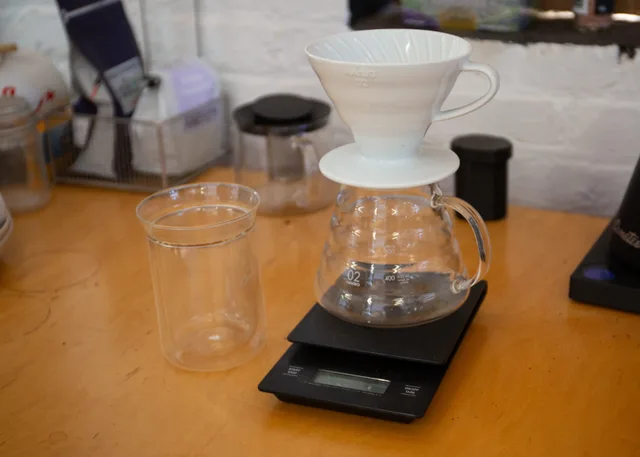
- One cone, three consecutive brews
- Dose
- 12 g each, weighed
- Water
- 200 g each, from one kettle fill
- Technique
- Same bloom, same pour pattern
- Record
- Drawdown time for each
- Serving
- Taste all three at the same temperature
Brew all three before tasting any. Let them settle to the same temperature, which takes about five minutes in a warm room, and cover them loosely so the first one does not lose more aroma than the third. Note the drawdown as each one finishes, because the time is the clearest evidence a grind change gives you.
Setup rules for three brews
- One cone, three consecutive brews
- 12 g dose each, weighed
- 200 g water each, one kettle fill
- Same bloom, same pour pattern
- Record drawdown time for each
- Taste all three at same temperature
Reading it
Taste in order, then reverse and taste again. Write three words for each cup and one sentence naming the difference between the two extremes. Do not name a favorite during the tasting; decide afterward from your notes.
If drawdown times differ by more than about fifteen seconds between cups on a grind-controlled flight, something other than your axis moved. Usually that is pour rate. Run it again rather than trusting the result.
The stage-level detail behind those numbers is worth understanding first. The coffees are easier to select once you can read what a bag is claiming.