Reviews
Hand versus electric: which compact coffee grinder actually suits your method
Hand or electric, hopper or single dose: how each compact grinder type performs at filter and espresso, and which one fits your brewing method.
What to take away
- Hand versus electric compact grinders split on adjustment resolution, retention and speed. Both types can make good coffee.
- Grind setting moves extraction yield, dissolved solids and acidity, so the grinder outranks the brewer.
- Hand steel burrs win at filter and press; espresso needs the adjustment resolution of a single-dose electric such as a 1Zpresso JX-Pro, DF64 or Niche Zero.
- Hopper grinders suit one coffee brewed daily; single dosing suits a shelf of open bags.
- Blade choppers have no correct use at any method.
- Match burr type and adjustment step to your method before you compare prices. Typical US prices as of 2026 run about $70 to $250 for a capable hand mill, $150 to $350 for a compact hopper electric, and $350 to $800 for a single-dose espresso-capable model. Burr material, burr size, adjustment mechanism and motor drive the spread.
Why grind decides the cup
Grind is a recipe variable, not a trim adjustment. In cold-brewed Colombian specialty coffees, grind level shifted extraction yield, total dissolved solids, total phenolic content, pH and titratable acidity. Particle spread and bed packing both moved with it.
Method compounds the effect. Across eighteen coffees brewed as espresso, infusion, French press and V60, brewing method and coffee species both changed caffeine, phenolic and mineral content in the cup. Choose grinder and brewer as one decision.
Four compact grinder types and what each does
Four compact grinder types
Best for
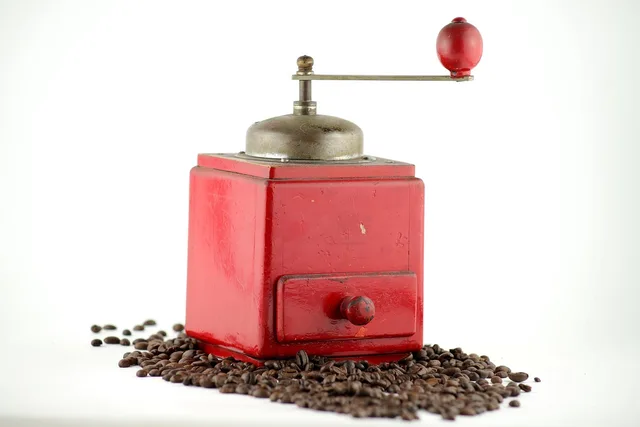
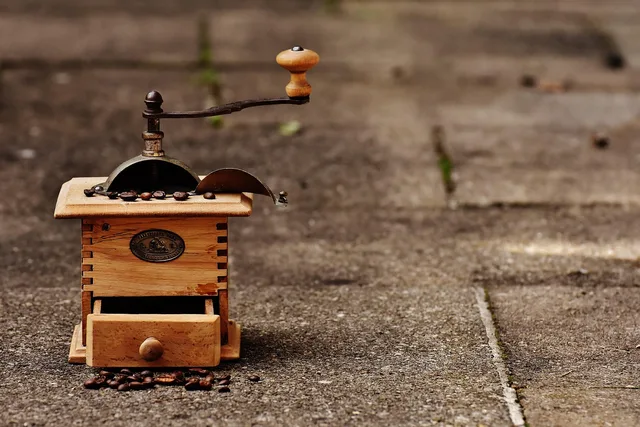
- Hand, steel burrs
- Filter, press, one or two cups
- Electric, hopper
- Filter, daily volume, one coffee
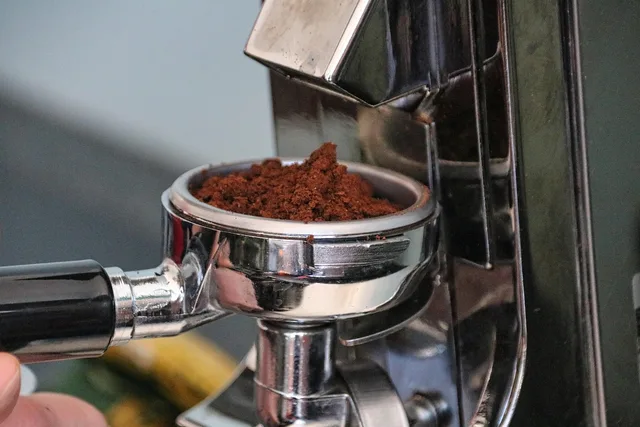
- Electric, single dose
- Filter and espresso, rotating beans
- Blade
- Nothing
Weakness
- Hand, steel burrs
- Slow and tiring at espresso fineness
- Electric, hopper
- Retains grounds, awkward to switch beans
- Electric, single dose
- Higher cost, one dose at a time
- Blade
- Boulders and dust in the same dose
Blade grinders chop instead of milling. The result is a particle spread no recipe can rescue, which is why they sit outside the comparison.
Four compact grinder types
Hand, steel burrs
- Best for
- Filter, press, one or two cups
- Weakness
- Slow and tiring at espresso fineness
Electric, hopper
- Best for
- Filter, daily volume, one coffee
- Weakness
- Retains grounds, awkward to switch beans
Electric, single dose
- Best for
- Filter and espresso, rotating beans
- Weakness
- Higher cost, one dose at a time
Blade
- Best for
- Nothing
- Weakness
- Boulders and dust in the same dose
Named hand and electric compact grinders
Compare these on burr type, adjustment range, retention, best method and price. Prices are typical US street prices as of 2026 and move with burr material, burr size, motor and retailer.
Hand grinders. Timemore Chestnut C2 (about $80) and C3 (about $100) use stainless steel conical burrs and click-stop adjustment; the C3 adds finer steps. 1Zpresso JX-Pro (about $160) and K-Ultra (about $200) carry external adjustment rings and suit espresso. Comandante C40 MK4 (about $300) is the filter reference. Normcore and Kingrinder fill the budget end at roughly $50 to $120. All are priced per unit, no subscription.
Compact electric, single dose and espresso. Niche Zero (about $700) uses conical burrs and low retention for espresso and filter. DF64 (about $400) runs 64 mm flat burrs. Turin SK40 (about $200) is a lower-cost single-dose conical option. Eureka Mignon Specialita (about $700) is a hopper espresso grinder with 55 mm flat burrs. DF83 (about $800) uses 83 mm flat burrs. Baratza Sette 270 (about $450) is a hopper espresso grinder with 30 macro and 9 micro steps. Fellow Ode Gen 2 (about $345) is filter-focused with flat burrs.
Hopper electric. Baratza Encore (about $170) and Virtuoso+ (about $250) are entry points with conical burrs and 40 steps. Fellow Opus (about $195) covers filter and light espresso with 41 steps. Wilfa Uniform (about $300) uses flat burrs for filter. Breville Smart Grinder Pro (about $200) adds timed dosing and 60 steps. All are one-time purchases.
Blade. Krups and Proctor Silex fast choppers cost about $20 to $40. Skip them.
At filter settings, the Timemore C2, Comandante C40 MK4 and Baratza Encore can handle the job, but the hand mills need about a minute of cranking per dose. For espresso, the 1Zpresso JX-Pro, DF64 and Niche Zero provide the fine adjustment that filter-first models such as the Encore and Ode Gen 2 do not.
Choosing by brewing method
Filter and immersion only. A hand grinder with steel burrs is the best value in home coffee. The Timemore C2 and C3, Comandante C40 MK4 and 1Zpresso K-Ultra match electrics costing several times more at these settings and fit in a drawer. On the electric side, the Baratza Encore, Wilfa Uniform and Fellow Ode Gen 2 cover filter and immersion.
Pick a grinder by method
What will you brew?
Filter and immersion only -> Hand grinder with steel burrs
Filter now, espresso later -> Single-dose electric
Filter now, espresso later. Buy the single-dose electric. The DF64, Niche Zero, Turin SK40 and Eureka Mignon Specialita offer the adjustment resolution espresso fineness needs. Cheap grinders lack that resolution, and buying twice costs more.
Household volume. A compact hopper electric, such as the Baratza Virtuoso+, Fellow Opus or Breville Smart Grinder Pro, accepts one coffee in the hopper and some retained grounds. That suits a household that brews the same bag daily.
What compact costs you
A compact grinder gives up burr diameter, so speed drops and adjustment steps get coarser. It need not give up particle consistency, which tracks burr quality and alignment rather than size. The honest trade is time, not cup quality, when the burrs are well made. Past that point, extra spending buys quiet and speed rather than flavor.
Budget about $70 to $250 for a capable hand mill, $150 to $350 for a compact hopper electric, and $350 to $800 for a single-dose espresso-capable model. Burr material, burr size, adjustment mechanism, motor and import duties drive the range.
Compact grinders lose most when you switch coffees. Tight burr-to-chute clearance means proportionally more retained grounds, which is why single dosing exists. A shop solves the same problem with one grinder per coffee instead of purging, a cost calculation rather than extravagance.
Test your current grinder first
Run three settings on the same coffee across three mornings. If the cups differ meaningfully, your grinder already gives you control and the constraint sits elsewhere.
If they taste identical, it is not resolving your adjustments and replacing it is justified. The criteria to apply next are more specific than category alone, and it helps to know what differs between two grinders internally.
Common questions
Is a hand grinder practical daily?
For one or two filter cups, yes, at roughly a minute of cranking. At four cups it stops being enjoyable, and an electric earns its counter space.
Do ceramic burrs last longer than steel?
Ceramic resists wear but chips when a stone passes through. Steel dulls slowly and survives foreign objects better, which matters more in a kitchen.
How long do burrs last at home?
Home use runs to years. Commercial burrs are rated in kilograms of coffee, and home volumes rarely approach those numbers before replacement.
Should I buy espresso capable now, just in case?
Only if espresso is a real plan with a date. Otherwise you pay for adjustment resolution you will not use, and a filter grinder does the job better for less.
In this guide
- What to look for when buying a coffee grinder: adjustment, retention and stabilityThe checks before buying a coffee grinder: adjustment resolution, retention, repeatability, stability, noise, serviceability, and claims that fail testing.
- Compact coffee grinders makers: what to ask before you buyWhat to ask compact coffee grinders makers before you buy: burr type, alignment at assembly, measured retention, spare parts and the size that fits your shelf.
- Keeping a compact coffee grinder from spoiling good beans between usesHow to keep a compact grinder from spoiling good coffee: managing retained grounds, moisture and oils, and how long roasted beans actually hold up.
- Can you actually taste what a grind change does to a compact coffee grinder?How to taste the difference a grind change makes: what to hold still, which methods show the difference clearly, and how to read the result.
- Compact coffee grinders: which shop constraints reach homeCompact coffee grinders for a shop and for a home shelf are different problems: which commercial espresso constraints transfer to a kitchen, and which do not.