Industry
Part of Hand versus electric: which compact coffee grinder actually suits your method
Compact coffee grinders makers: what to ask before you buy
What to ask compact coffee grinders makers before you buy: burr type, alignment at assembly, measured retention, spare parts and the size that fits your shelf.
Compact coffee grinders makers choose among mechanical approaches to burr geometry, alignment, adjustment, and the route grounds take to the exit. This article explains what differs between grinders mechanically and what those differences do, so you know which questions to put to a maker before you buy and why the answers matter. A few widely known compact models show the burr types; they are examples, not a ranking of one maker above another.
What to take away
- Alignment between the two burrs matters more than what the burrs are made of.
- Every internal surface a ground particle can rest on is a retention path.
- Grind size is one variable among several that determine what ends up dissolved in your cup.
- Roast level often outweighs grind, which is a useful check on grinder obsession.
The four things inside that matter
The four things inside
- Burr geometry.The cutting and crushing profile determines how particles fracture. Conical and flat geometries produce different distributions from the same nominal setting.
- Alignment.If the two burrs are not parallel, the gap varies around the circumference and you get several grind sizes at once.
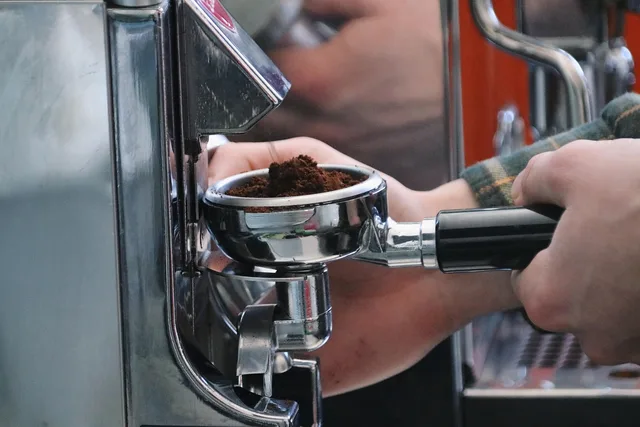
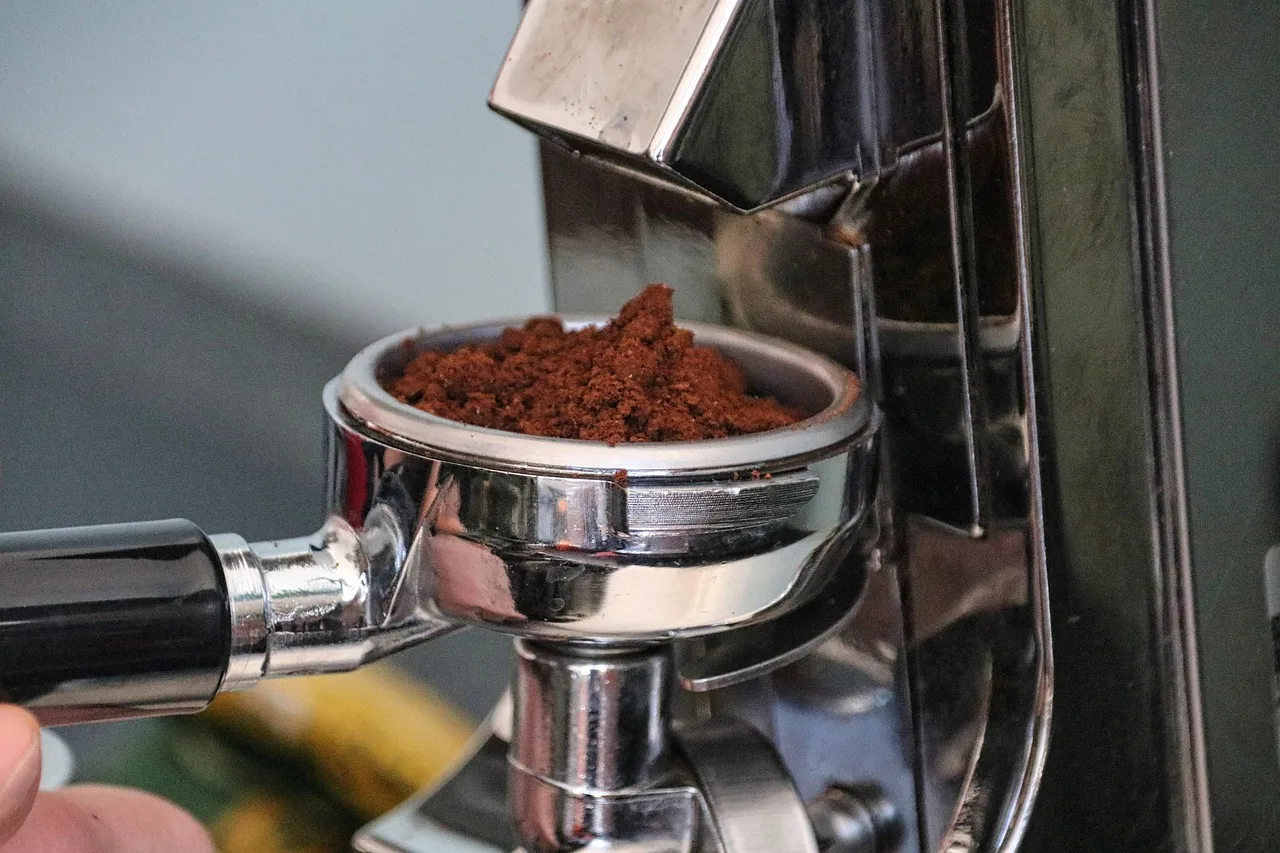
- The path from burr to exit.Every ledge, corner and chute is somewhere grounds can stay.
- Adjustment mechanism.Threads, shims and detents decide whether a setting can be returned to.
Geometry and alignment reach the cup through the spread of particle sizes. In one dose, fine particles give up their soluble material quickly and coarse ones slowly, so a wide spread can taste bitter and sour at the same time, and no grind setting fixes both.
Alignment is the one that separates grinders at similar prices. It is a tolerance question in manufacture and assembly, and it is why two grinders with identical burr specifications can behave differently. A commercial counter reads that as shot times that drift between two machines at the same setting.
Makers and their mechanisms
Several widely available compact grinders show these choices in practice. Baratza's Encore and Sette 270 use conical burrs. Fellow's Ode uses flat burrs.
The 1Zpresso JX and K-Ultra and the Comandante C40 are hand grinders with conical burrs. Eureka's Mignon line uses flat burrs. These are examples of burr type, not a ranking. The burr type is the part a maker states plainly; alignment, adjustment and the grounds path are the parts to ask each maker about, using the questions below.
What those differences change
Grind size is a real variable in what you extract, but it works alongside others.
A review of variables affecting antioxidant extraction in hot and cold brew coffee lists roasting temperature, grind size, brewing temperature and brewing duration. It notes they all have significant effects on the extractable content of a brew.
At low brewing temperatures, the outcome is especially sensitive to variation across all of them.
That is worth holding onto. A better grinder narrows one variable. It does not narrow the others, and the others do not disappear.
Where roast outweighs grind
Work on two Hawaii-grown arabica varieties found that roasting and variety significantly modulated metabolites, lipids and biogenic amines, while mineral content and antioxidant capacity were influenced only by the brewing method. Different components of the cup respond to different stages of the process, and the grinder is only one of those stages.
A practical consequence: if your coffee changed and you did not touch the grinder, look at the bag before you look at the burrs. That is easier when the bag carries a roast date, which is the first thing worth demanding from whoever sold it.
The retention problem, concretely
| Design choice | Retention effect |
|---|---|
| Long chute, several bends | Higher |
| Vertical drop to exit | Lower |
| Large internal volume around burrs | Higher |
| Single dose with bellows or knock | Lower in practice |
Retention is not only a waste question. Retained grounds are stale grounds, and they arrive in the next dose. A grinder holding two grams and dosing eighteen is delivering about eleven percent old coffee every time.
What to ask a maker
Ask whether the burrs are aligned at assembly and how, and what the measured retention is with a stated dose. Ask whether burrs and the adjustment assembly are available as spares. Also ask for the grinder's height, hopper size, and footprint, because compact means it has to fit your shelf.
Those questions are also the checks worth running before buying: whether the burrs are aligned at assembly and how, what the measured retention is with a stated dose, and whether burrs and the adjustment assembly are available as spares. A maker who answers all three is telling you something real, and the answers sort the categories cleanly, which is where the decision should start.