Reviews
Part of Planning a coffee station starts with the sequence, not the shelf
Running a simple tasting at your own home coffee station, step by step
How to run a simple tasting at your own coffee station: what to set up, how much training you actually need, and what your palate can and cannot resolve.
Tasting sounds like something that requires a certificate. It does not. It requires two cups, a spoon, and the discipline to write things down before you talk yourself into an opinion. Here is how to do it at your own station.
What to take away
- Basic training is enough to tell commercial coffee from specialty coffee reliably.
- Fine gradation between good coffees is a different skill and takes much longer.
- Set the tasting up at your station with the same water and the same grind, or you are testing your setup rather than the coffee.
- Write before you speak. Discussion contaminates a tasting faster than anything else.
What you can learn quickly, and what you cannot
The two skills differ. A study graded fourteen Ecuadorian coffees with a small panel of semi-trained tasters and cross-checked results against chemical analysis. It found basic training was enough to distinguish commercial from specialty coffee.
What Training Can Distinguish
Basic training
- Commercial vs specialty
- Yes
- Defective or flat coffee
- Yes
- Acidity as grapefruit
- No
- Acidity as orange
- No
- Acidity as lime
- No
- Acidity as apple
- No
- Two good Ethiopians apart
- No
Deeper knowledge
- Commercial vs specialty
- Yes
- Defective or flat coffee
- Yes
- Acidity as grapefruit
- Yes
- Acidity as orange
- Yes
- Acidity as lime
- Yes
- Acidity as apple
- Yes
- Two good Ethiopians apart
- Yes
But ranking specialty coffees against each other required deeper knowledge of specific attributes, such as whether an acidity reads as grapefruit, orange, lime or apple.
That is the honest map of your first year. Within a few weeks you will spot a defective or flat coffee immediately. Telling two good Ethiopian coffees apart takes far longer, and there is no shortcut.
What even trained panels struggle with
Knowing where the limits are makes your own confusion less frustrating. A sensory study of Geisha coffees from Panama's production zones found consumers could tell aroma, flavor, and taste descriptors apart, but the physicochemical measurements did not differ significantly across production zones.
What Drives Perceived Flavor
Roast degree
- Sensory difference
- Substantial
- Physicochemical data
- Not significant
- Beginner's likely cause
- More likely
Origin
- Sensory difference
- Weak
- Physicochemical data
- Not significant
- Beginner's likely cause
- Less likely
Roast degree was a substantial driver of the sensory differences, and the sensory and instrumental data did not line up strongly.
The lesson for a beginner: when two coffees taste different, roast is a more likely cause than origin. Origin claims on a bag are frequently doing less work than the roaster's decisions. Expect that gap to widen, because flavor language on bags is running ahead of the coffee rather than describing anything new.
Setting up the tasting
You need very little.
- Two identical cups, ideally with a wide mouth.
- A spoon each, or one spoon and hot water to rinse between.
- The same water, from the same kettle, at the same time.
- Paper. Actual paper, not your phone.
Grind both coffees on the same setting. Use the same dose and the same water volume. Pour both, wait four minutes, break the crust with a spoon, and smell it before you taste anything. A grinder holding a couple of grams from yesterday breaks that rule quietly, so empty it before the first cup.
The order of operations
Smell dry grounds first, before water touches them. Then smell the crust after brewing. Then break the crust and smell again, which releases a different set of aromas. Then wait until the cups are cool enough to sip without flinching, around 60 degrees Celsius, and taste.
Write one word after each of those four steps. Four words per coffee is plenty for a first tasting.
Do not talk during
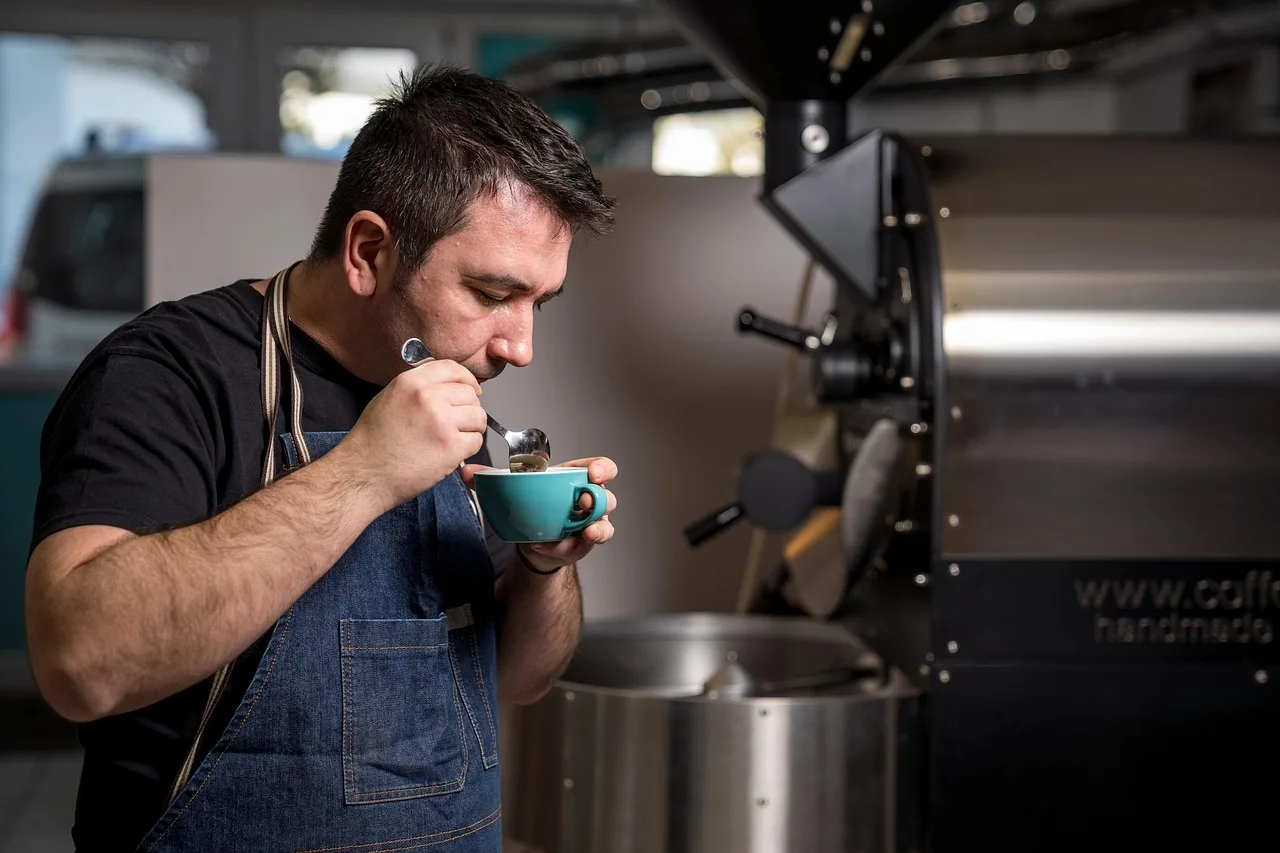
Say nothing until both people have written. Sensory panels are structured around this rule for good reason: the first opinion spoken out loud becomes everyone's opinion. At home, with two people and a shared kitchen, it happens within seconds.
Repeat with the same coffees
Run the identical tasting a week later with the same two coffees; if your notes match earlier notes, you perceive something stable. If they contradict, you were guessing, which is fine and worth knowing.
This is the same discipline that makes a two-cup comparison at home worth trusting. It works best when beans are kept in conditions that have not moved between sessions.