Reviews
Part of Planning a coffee station starts with the sequence, not the shelf
Coffee station storage habits, compared for how well they hold flavor
How to store coffee at a home station: what oxidation actually does to aroma, why humidity matters more than people think, and what containers earn their place.
Coffee station storage is where most home coffee quietly goes wrong. The brewing was fine. The coffee was already tired. Oxidation and water do the damage, and the container on the counter sets the pace.
What to take away
- Oxidation has a chemical signature, and the notes it adds are sour, rancid and musty.
- Humidity is the fastest-acting variable, and the one a kitchen counter is worst at controlling.
- Whole beans hold up far better than ground coffee, for reasons of surface area.
- Steel vacuum canisters and plunger-lid canisters hold flavor longest; clear jars hold it least.
- Small, opaque, airtight, and often refilled beats large and beautiful.
What oxidation does
Stale coffee is not simply weaker coffee. Fingerprinting the volatile profile of oxidized coffee across arabica and robusta in different packaging found twenty-five compounds that behave as markers of oxidation. Twenty-one decrease, four increase.
Oxidation markers in coffee
- 25compounds mark oxidation
- 21compounds decrease
- 4compounds increase
- 4rise acetic, propionic, musty pyrrole
The four that rise are the ones you notice: acetic acid and propionic acid, plus a pyrrole carboxaldehyde described as musty. The acids read as pungent, sour and rancid.
That is old coffee: not weak, but sour and slightly musty. The pleasant top notes are gone, and the unpleasant ones are louder.
If your coffee tastes that way and your recipe has not changed, the bag is the problem. It may have started going wrong before you bought it, because a warm shelf under shop lights ages coffee faster than a cupboard does.
Humidity moves fastest
Dry coffee pulls water out of the air, and the rate depends on relative humidity more than on anything else in the room. A study stored unpackaged instant coffee at 11, 32 and 65 percent relative humidity.
Humidity drives moisture uptake
- 11% RHstable
- 32% RHintermediate
- 65% RHcritical in 1 week
The sample at 65 percent passed critical moisture levels within one week, with visible degradation and impaired dissolving within three months. The sample at 11 percent stayed stable throughout.
Instant coffee is more hygroscopic than roasted beans, so treat that as an upper bound rather than a forecast for your beans. The direction is what matters.
A kitchen runs humid, especially one where a kettle boils twice a day. An unsealed container sits in that air all day.
The four rules
- Airtight, always.Not a clip, not a folded bag. A gasket or a valve bag rolled and clipped tight.
- Opaque.Light degrades oils. Clear jars look good and work badly.
- Room temperature, away from the kettle.The cabinet above the stove is the worst place in the kitchen.
- Whole bean until the moment of use.Grinding multiplies surface area, and everything above accelerates.
Coffee storage containers, ranked by flavor retention
These are the containers you can buy today, ordered by how well they keep air and light off the beans. Prices are typical US retail as of 2026 and scale with size.
Containers ranked by flavor retention
Container
- Original valve bag, clipped
- Nearly
- Airscape Classic steel canister
- Yes
- Fellow Atmos / Ankomn Zero G
- Yes
- Prepara Evak plunger plastic
- Yes
- Tightvac / OXO Pop button-seal
- Yes
- Ball mason / Kilner clip-top glass
- Yes
Airtight
- Original valve bag, clipped
- Yes
- Airscape Classic steel canister
- Yes
- Fellow Atmos / Ankomn Zero G
- Yes
- Prepara Evak plunger plastic
- No
- Tightvac / OXO Pop button-seal
- No
- Ball mason / Kilner clip-top glass
- No
Opaque
- Original valve bag, clipped
- Fine for two weeks
- Airscape Classic steel canister
- Best default
- Fellow Atmos / Ankomn Zero G
- Strongest seal
- Prepara Evak plunger plastic
- Cupboard only
- Tightvac / OXO Pop button-seal
- Best for one week
- Ball mason / Kilner clip-top glass
- Looks good, ages coffee
Verdict
- Original valve bag, clipped
- Airscape Classic steel canister
- Fellow Atmos / Ankomn Zero G
- Prepara Evak plunger plastic
- Tightvac / OXO Pop button-seal
- Ball mason / Kilner clip-top glass
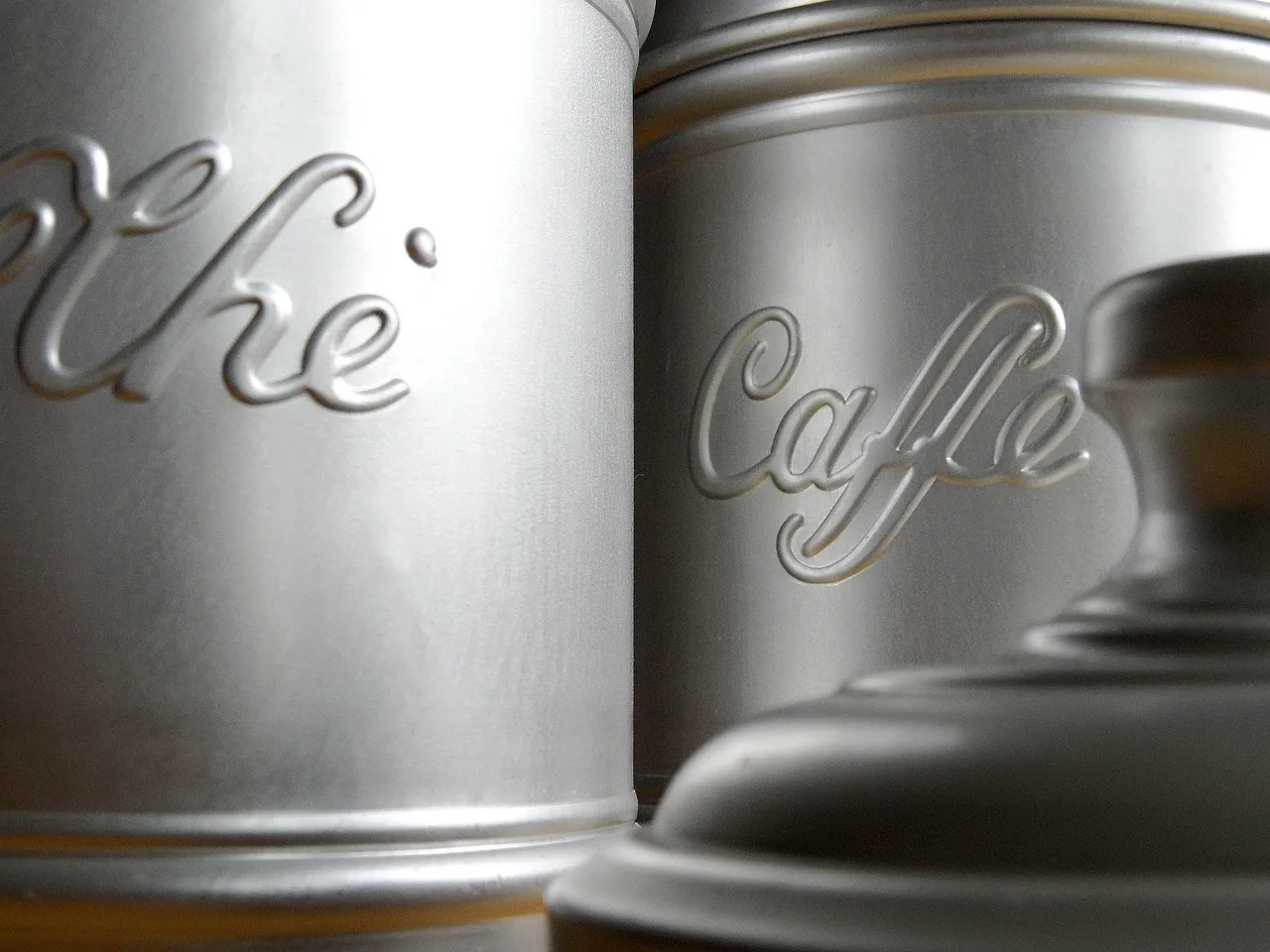
Planetary Design's Airscape Classic uses two lids: a vented outer cover and an inner plunger that presses onto the beans and pushes air out. The steel version typically costs about $30 to $50 by size. It suits a 250 gram bag you finish in two weeks.
The Fellow Atmos is stainless steel with a twist lid you pump to pull a vacuum. It typically runs about $30 for the smallest size and about $40 for 0.7 liter. Ankomn's Zero G is another vacuum canister in the same price band. Both release the vacuum when you open them.
Plastic costs less. The Tightvac Coffeevac, about $20 to $25 for a one-pound size, seals with a button on the lid. Prepara's Evak, about $25, uses a plunger lid with a silicone gasket. Light gets through both bodies.
The OXO Good Grips Pop Container, about $15 to $20 for a 1.5 quart, seals with a push button and stacks neatly. Ball mason jars cost about a dollar each in a case of twelve, and Kilner clip-top jars about $10 to $12 with a rubber gasket. Neither blocks light.
Ranked by flavor retention, steel vacuum canisters lead. Airscape's plunger steel is close behind, then plastic plunger designs like the Evak, then button-seal plastic.
Buy less, more often
The most effective storage strategy is not a container but a smaller bag. A 250 gram bag drunk in twelve days never gets old enough to matter. It costs slightly more per gram than a kilo that goes stale in month two.
Small bags, short windows
250 g bag drunk in 12 days never gets old enough to matter
Costs slightly more per gram than a kilo
A kilo goes stale in month two
Split bulk arrivals into weekly portions, open one
It is also the right answer to a price rise, since the pressure on coffee prices is upstream and long-run, and a bigger bag only converts it into waste.
If you must buy in bulk, split it on arrival into weekly portions and only open one. This is the single highest-return habit at a coffee station, and it costs nothing but a few minutes when the delivery arrives.
It also makes the rest of your setup honest, because a well planned station assumes a small working supply rather than a pantry hoard. Whether the difference is audible in the cup is something you can settle with a fresh bag against a month-old one.