Costs
Part of Small space coffee gear under review: the good, the weak and the verdict
How to build a tasting flight around your brewers
How to run a brewer flight in a small kitchen: what to hold constant across devices, what each one changes, and how to read a visible difference.
A brewer flight compares devices rather than coffees. It is the flight most people want to run and the hardest one to run fairly, because devices differ in more than one way at once. It is also the argument against accumulating them, since a box delivering an object every month fills a small kitchen and keeps going.
What to take away
- Brewing method significantly changes what ends up dissolved, which is why the flight is worth running.
- Water temperature and water type may matter less than you think for some measures.
- Hold dose, grind and coffee identical, and accept that brew time will differ.
- Visible differences, like crema, are quality markers with real chemistry behind them.
What a brewer flight can actually show
The differences are not subtle. One study assessed total phenolic content across preparation methods, using instant, freshly ground and pre-ground arabica and robusta. It found that the brewing method had a significant impact on total phenolic content, with a percolator recommended for ground and freshly ground coffee. Water temperature and water type had no effect on that particular measure.
That last clause is worth holding onto. It does not mean water does not matter for flavor. It means that for one specific measurement, two variables people obsess over did not move the result, while the device did.
Setting up a fair comparison
Devices cannot be equalized on everything. Decide what you are holding constant and accept the rest.
Hold Constant vs Let Vary
Hold constant
- Coffee
- Coffee and roast date
- Dose
- Dose in grams
- Grind
- Grind setting
- Water
- Water source and temperature
- Volume
- Finished volume
Let it vary
- Coffee
- Brew time
- Dose
- Bed geometry
- Grind
- Contact pattern
- Water
- Filter material
- Volume
- Agitation
Matching finished volume is the step people skip. If one brewer gives you 180 ml and another 240 ml from the same dose, you are comparing strengths, not devices. Dilute the stronger one with hot water until the volumes match, then taste.
That is a legitimate correction, not a fudge, because strength is the variable you were not trying to test. The same move rescues a cup that came out strong and harsh, where bypass dilution lowers strength without touching extraction.
Look before you taste
Some device differences are visible. Espresso crema is the clearest example, and it is treated as a quality marker for good reason. It is a food foam that also contains solid coffee cell-wall fragments. It sits under a remarkable temperature gradient, and has an oil-in-water emulsion as its continuous phase.
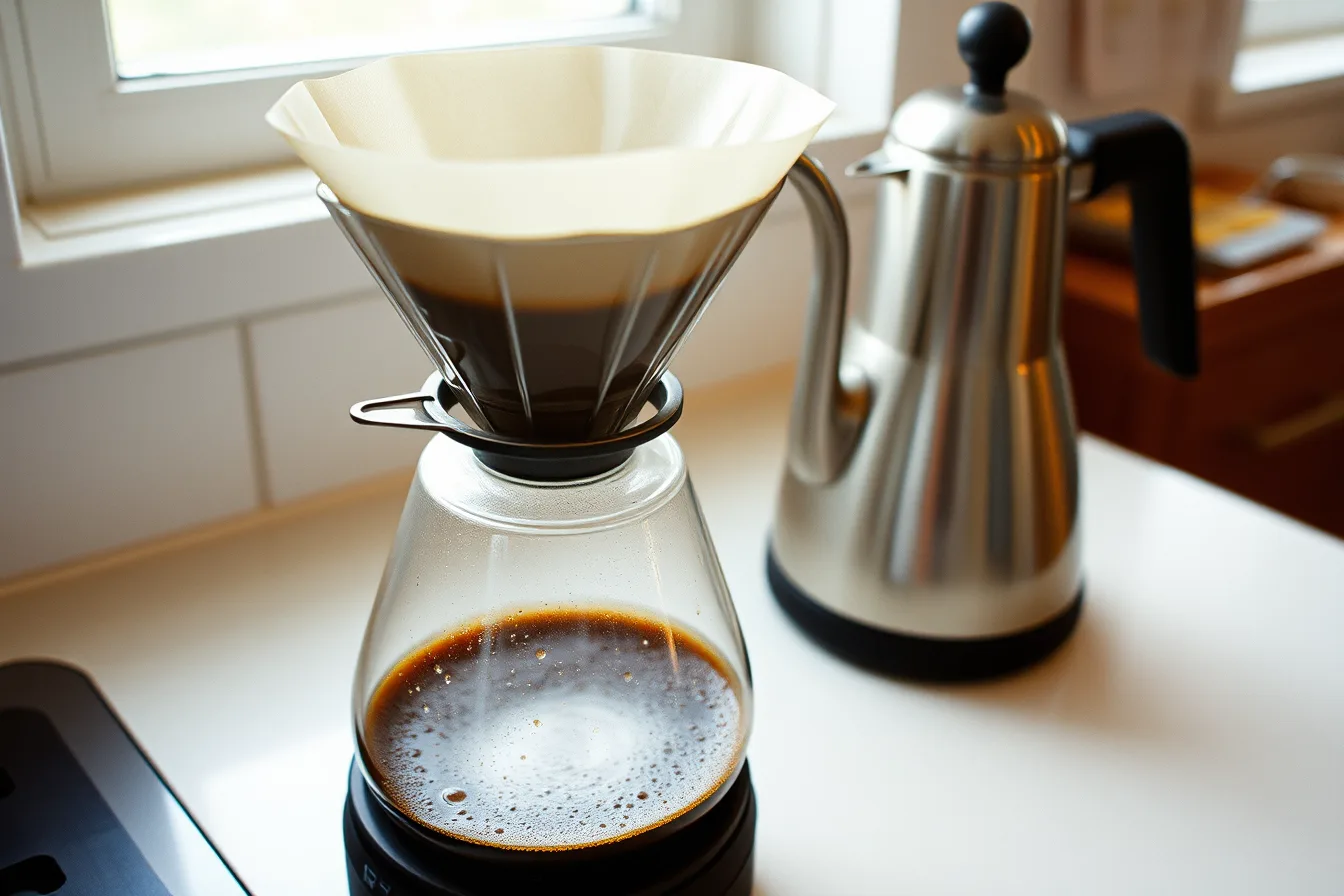
For filter devices the visible cues are the bed after drawdown and the clarity of the cup. A flat, even bed suggests even extraction. A crater or a ring on the wall suggests channeling, and that tells you the difference you tasted may be technique rather than device.
The flight
Brew two devices back to back with identical coffee, dose and grind. Match final volume. Let both reach the same temperature. Taste in both orders. Write three words each and one comparison sentence.
Then swap the grind: brew both again with the grind adjusted for each device rather than held identical. This second round is the one that tells you which device you would actually live with, because in real use you would adjust for each rather than forcing one setting on both.
The first round tells you what the devices do. The second tells you what they can do. Both rounds depend on an honest tasting method, and on knowing which claims on the box were never about the device.