Reviews
Part of Small space coffee gear under review: the good, the weak and the verdict
Sugar and cream are not equal choices on a small coffee shelf
What to keep alongside a small coffee setup: how much caffeine a cup carries, what sugar does to the habit, and the few extras worth the shelf space.
In a small kitchen, everything you keep next to the coffee is displacing something else. That makes the question of what to keep beside it a real one rather than a styling exercise.
What to take away
- Caffeine per cup varies widely, so cup count is a poor way to track intake.
- Adding sugar to coffee changes the long-term picture in a way that adding cream does not.
- Keep one sweetener, one milk, and nothing else that spoils.
- The most useful thing to keep next to the coffee is a glass of water.
Know what a cup is carrying
Cup counting is a rough tool. An 8-ounce cup of coffee carries 95 to 200 mg of caffeine, against 14 to 60 mg for tea and 35 to 45 mg for a 12-ounce cola.
Caffeine per serving
- Coffee, 8 oz95-200 mg
- Tea14-60 mg
- Cola, 12 oz35-45 mg
Synthetic caffeine appears in pain relievers, cold medicines and energy products.
The practical point for a small setup: if you brew stronger or larger than average, your three cups are not somebody else's three cups. And if you also take a caffeinated medication, that counts. The gap between home and takeaway is wider still, at roughly three times the caffeine per serving.
Sugar and cream are not equivalent
They are usually discussed together, but the evidence separates them. Three large prospective cohorts examined coffee consumption changes against weight change.
Sugar vs cream in coffee
Unsweetened coffee
- Weight change
- Inverse
- Shelf priority
- Baseline
- Ease of removal
- N/A
Sugar added
- Weight change
- Counteracted
- Shelf priority
- Consequential
- Ease of removal
- Easy
Cream added
- Weight change
- No effect
- Shelf priority
- Secondary
- Ease of removal
- Harder
Increases in unsweetened caffeinated and decaffeinated coffee were inversely associated with weight gain, while adding sugar counteracted that association and adding cream or coffee whitener did not.
That is a useful asymmetry for a small kitchen. If shelf space forces a choice, the sugar jar is the more consequential item, and it is the one most easily replaced with nothing.
What earns shelf space
- One sweetener.Plain sugar. Flavored syrups take space and get used twice.
- One milk.Whichever you actually drink. Two half-used cartons is a small-kitchen failure mode.
- Water glass.Costs nothing, improves every cup after the first.
- Salt.You already own it. A pinch reduces perceived bitterness.
- A plain, shelf-stable snack.Dark chocolate or plain biscuits, not anything requiring refrigeration.
What does not earn it
Items left out that need refrigeration, a monthly second brewer, decorative canisters that are not airtight, and a spice rack of syrups all take space. In a small kitchen, each displaces something you use daily. You will not notice until the morning you cannot find the scale.
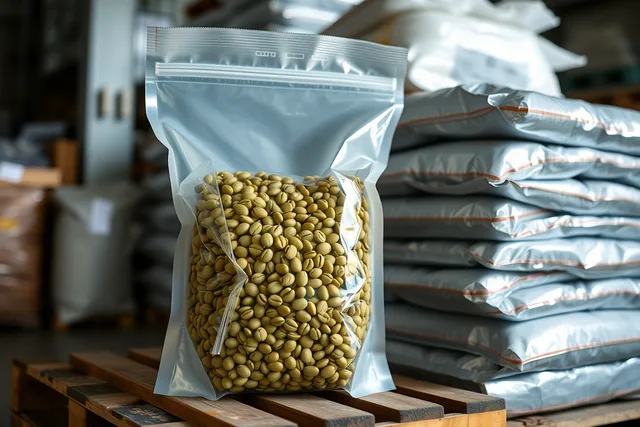
The canister is the one worth being strict about, because the whole job of a coffee container is a barrier that actually seals.
| Item | Keep at the setup | Reason |
|---|---|---|
| Sugar jar | Yes, small | Balancing tool |
| Milk | No, refrigerate | Spoils, and warms fast |
| Dark chocolate | Yes | Shelf stable, pairs well |
| Syrup collection | No | Space per use is terrible |
| Second brewer | Cupboard | Not a daily item |
The one-in-one-out rule
Small kitchens work when nothing arrives without something leaving. For coffee gear, a new accessory must displace an existing one. That forces honesty about how often you use each item, not how often you imagine using it.
It pairs with judging gear on stored footprint rather than counter footprint. The same restraint makes serving coffee well a subtraction exercise.