Reviews
Part of Small space coffee gear under review: the good, the weak and the verdict
What labels can tell you about small space coffee gear: the honest picture
How to read the labels on coffee gear: capacity claims, materials and food-grade wording, and the health claims that do not survive checking.
Gear labels mix three kinds of statement: measurements, material descriptions and claims about what the coffee will do for you. Only the first two are worth much, and even they need translating.
What to take away
- Capacity figures are usually to the brim, not to a usable fill line.
- Food-grade wording on containers describes what a container may safely hold, not how well it seals.
- Health claims attached to gear are almost always about coffee, not about the device.
- A missing spare parts list is more informative than most of the label.
Capacity is measured optimistically
A 600 ml press does not brew 600 ml of coffee. The figure is typically brim volume, before you account for grounds, the plunger, and the headspace you need to avoid a spill. Assume roughly two thirds of the stated capacity is usable.
Stated vs usable capacity
Stated capacity
- French press
- 600 ml
- Grounds
- included
- Plunger
- included
- Headspace
- included
- Kettle
- max fill
Usable capacity
- French press
- ~400 ml
- Grounds
- subtracted
- Plunger
- subtracted
- Headspace
- subtracted
- Kettle
- lower at pour angle
The same applies to kettles, where the stated capacity is the maximum fill and the useful capacity is lower once you factor in a pouring angle.
Material and food-grade wording
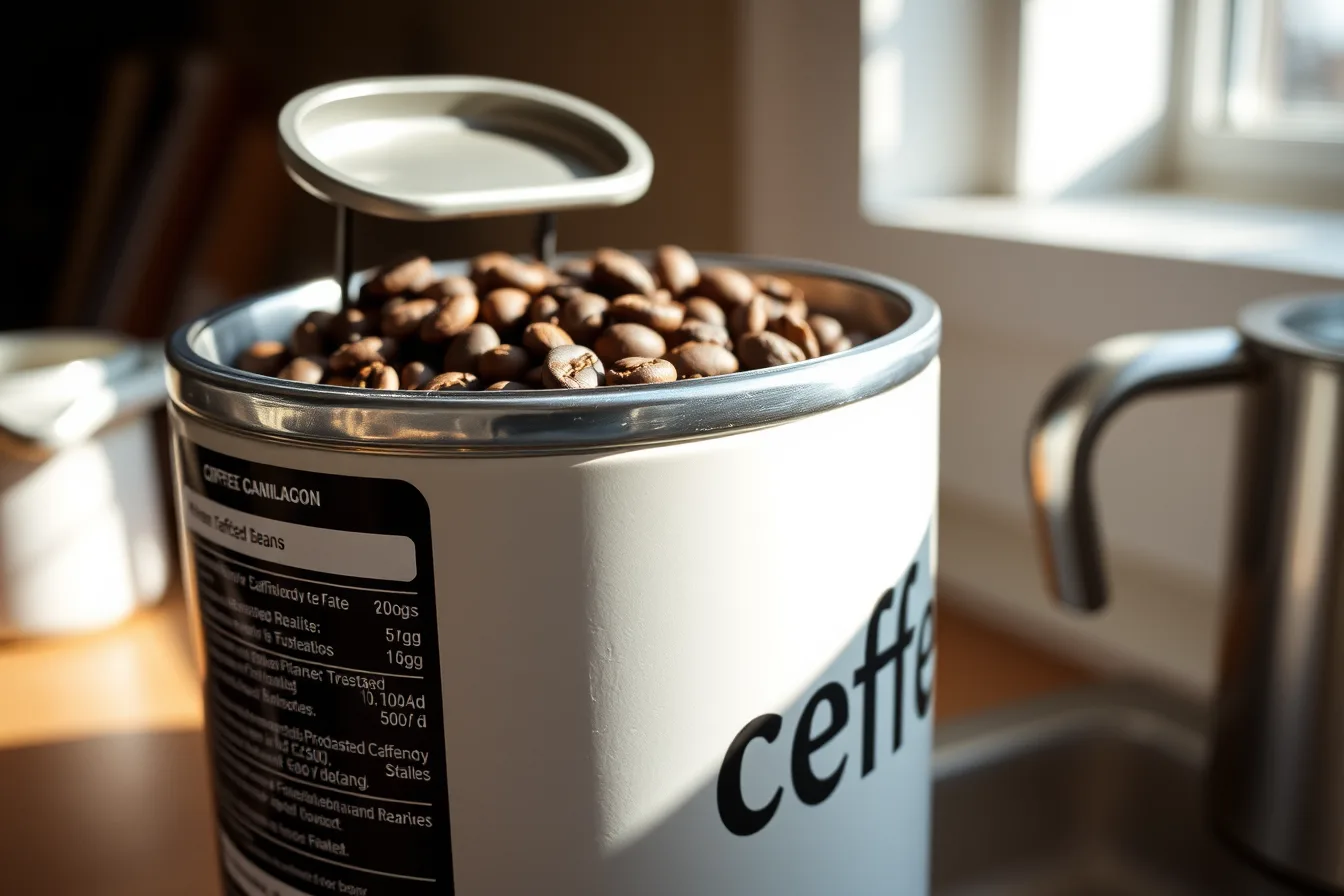
Containers described as food grade are being described for what may safely be stored in them, which is a real property and a narrow one. It says nothing about the oxygen barrier, which is the property a coffee canister actually needs, and nothing about whether the lid seals under pressure from degassing beans.
Food grade vs coffee container
Food grade
- Safe storage
- yes
- Oxygen barrier
- not stated
- Seal under degassing
- not stated
- Cardboard liner lid
- food grade
- Clear jar
- food grade
- Latch without gasket
- food grade
Coffee container
- Safe storage
- yes
- Oxygen barrier
- required
- Seal under degassing
- required
- Cardboard liner lid
- poor seal
- Clear jar
- admits light
- Latch without gasket
- decorative
A repurposed container is not automatically a coffee container. A lid with a cardboard liner is a poor seal, a clear jar admits light whatever it is made of, and a canister that latches without a gasket is decorative.
In a small kitchen decorative is worse than useless, because it holds a slot something you use daily could have had. Read the material description for durability, and judge the seal separately by pressing the lid on and listening.
Health claims on the box
Gear is frequently sold with claims about the drink it produces. Those claims are about coffee generally, not about the device. Buying to answer one of them is money spent on a problem you do not control.
For context on scale, a review of macroelements across brewing methods calculated that one portion of coffee brew covers roughly 7.5 percent of the daily magnesium requirement for women and 6.6 percent for potassium, with phosphorus up to 2.2 percent. Real, modest, and not attributable to any brewer.
Caffeine claims are similarly loose. A review of common caffeine misconceptions found that moderate daily doses, around 3 mg per kilogram, do not appear to increase urine volume in habitual consumers.
Typical beverage consumption has little to no effect on fluid balance. The dehydration claim that gear marketing sometimes leans on does not hold at ordinary doses.
What the label omits
| Missing from most labels | Why it matters |
|---|---|
| Usable capacity | The number you will actually brew |
| Spare parts availability | Whether it survives a broken seal |
| Filter compatibility | Whether refills exist in three years |
| Weight when full | Whether you can pour it comfortably |
| Dishwasher tolerance for each part | Whether it survives the year |
What to do with a label
Read it for measurements and materials, then check the manufacturer's site for a spares page. A brewer with a spares page is meant to be kept. One without it is meant to be replaced.
That is the most useful thing a label indirectly tells you. It is the same judgment as assessing stored footprint before counter appeal, and it applies to the bags the coffee arrives in.