Reviews
Part of Twelve small coffee bar ideas for a compact kitchen, each with the reason it works
Snacks worth keeping near a home coffee counter, and what to skip
What to serve alongside coffee at a small home bar, how plant milks change the drink, and the food safety rules that matter when things sit out.
Pairing is usually written as a matching exercise. It is more useful as a subtraction exercise: what can sit next to a cup of coffee without ruining it, and what has to be kept away from the bar because it will spoil.
What to take away
- Plant milks are not interchangeable with dairy, and the differences are measurable and tasteable.
- Sweet food ahead of coffee makes the coffee taste sour. Serve coffee first.
- Anything with milk or cream in it should not sit out at the bar.
- The best pairing for a coffee you want to taste is nothing at all.
The subtraction rule
Strong sweetness suppresses your perception of sweetness in the next thing you drink, which is why coffee after cake reads as thin and sour. If the coffee is the point, serve it first and alone. If the food is the point, the coffee is a palate cleanser and you can stop worrying about it.
Plant milks are their own ingredient
Swapping dairy for a nut milk is not a neutral substitution: a study developed almond, cashew, hazelnut and walnut milks for use with arabica espresso. The nut versions had higher particle size and viscosity than commercial milk, along with a different volatile profile, with more benzaldehyde and less furfuryl alcohol.
Plant milk flavor profiles
Oat
- Sweetness
- sweeter
- Body
- thinner
- Astringency
- low
- Flavor note
- sweet
Cashew
- Sweetness
- rounder
- Body
- rounder
- Astringency
- low
- Flavor note
- nutty
Almond
- Sweetness
- less sweet
- Body
- thinner
- Astringency
- more astringent
- Flavor note
- nutty, bitter
Sensory testing put nut milks below commercial milk overall, with cashew the most preferred of the four. The gap was attributed to nutty and bitter notes from aldehydes.
The practical reading is not that plant milk is worse. It is that each one brings a flavor, so pick the one whose flavor you want. Oat is sweeter and thinner, cashew rounder, almond thinner and more astringent. Whichever you use, 30 percent is already a lot of it, and less is usually the better serve.
What actually pairs
- Plain toast or a plain roll.
- Neutral, absorbent, gets out of the way.
- Hard cheese.
- Salt and fat contrast well with a medium roast.
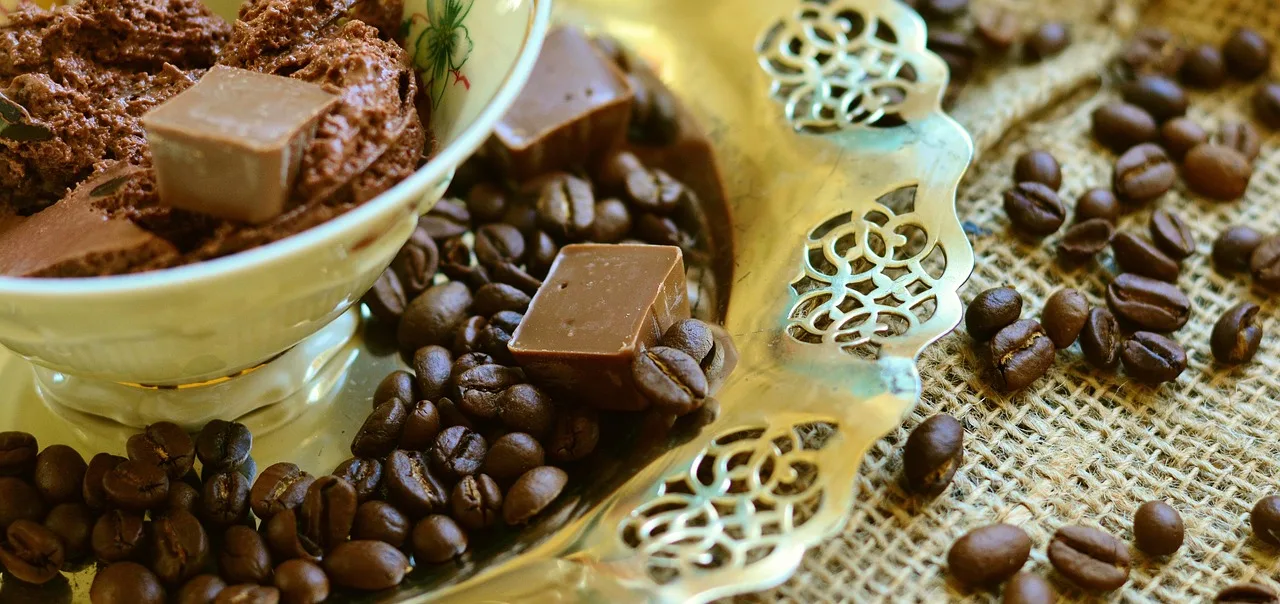
- Dark chocolate, 70 percent or above.
- Bitter against bitter works better than sweet against bitter.
- Salted nuts.
- Salt reduces perceived bitterness and lets acidity through.
- Nothing.
- Underrated. Especially for a coffee you are trying to learn.
What to keep off the bar
Anything with milk, cream, or custard should stay in the refrigerator and come out only per serving. This is not fussiness. Staphylococcus aureus grows across a broad range, and extension guidance notes that the toxin it produces is heat stable and survives normal cooking. So reheating food left out does not make it safe.
Keep it out or refrigerate?
Does it contain milk, cream, or custard?
refrigerate and serve per portion
it can stay at the bar
Growth is most rapid near body temperature, which is roughly what a warm kitchen corner reaches on a summer afternoon.
So: milk in the fridge, cream in the fridge, filled pastries in the fridge or eaten. A jug of milk left at the bar all morning is the one genuinely risky habit in home coffee. What can stay out is a shorter list than it looks, and even a syrup has a shelf life set by its packaging.
Building a small standing selection
| Item | Keeps at the bar | Why it works |
|---|---|---|
| Dark chocolate | Yes | Contrast, long shelf life |
| Salted nuts | Yes | Cuts bitterness |
| Plain biscuits | Yes | Neutral |
| Milk or cream | No | Refrigerate, per serving |
| Filled pastry | No | Refrigerate or eat |
The one experiment worth running
Take one coffee and drink it three ways in a single sitting: black, with a splash of dairy, and with a splash of a plant milk. Two sips each. Write what changed. Most people discover their default is habit rather than preference, and switching costs nothing.
The same coffee tastes different enough between the three that it is worth setting the comparison up properly. Which coffee you use for it matters too, and the bag will tell you more than you think.