Reviews
Part of Home coffee brewing in a compact kitchen: four variables and the order to adjust them
Stocking home coffee brewing gear: roast dates, storage, and staff answers
What a shop needs to get right when stocking home brewing gear and beans: roast dates, storage conditions, staff answers, and honest shelf placement.
This is a checklist for anyone deciding what goes on a shelf: a cafe with a retail wall, a hardware store adding a coffee section, or someone stocking a shared office kitchen. Stocking home coffee brewing gear and beans rewards the same habits in all three. It is written around what goes wrong rather than what sells.
What to take away
- A roast date on the bag, not a best-by date, is the most useful thing to require from a supplier.
- Storage on your own shelf undoes supplier quality faster than most buyers expect.
- Stock the cheap items that fix problems before the expensive items that promise to.
- Staff who can ask one diagnostic question are worth more than a wall of signage.
Beans: what to require from a supplier
Ask for a roast date on every bag, not a shelf-life stamp. A best-by date sixteen months out tells buyers nothing and hides slow stock.
Ask for origin and process on the label. Ask the roaster to state roast level in plain words, not a color chart. Roasters worth stocking publish that anyway. It is the first thing to look for on a roaster's site.
Then ask a harder question: how often can you be resupplied? A shelf turning over every three weeks does not need clever packaging. A shelf turning over quarterly needs valve bags, opaque material, and a plan for the last third of the stock. Order sizes should follow turnover rather than case discounts.
Storage on your own shelf
Storage temperature is not a minor detail. Coffee held at 5 degrees Celsius for a month showed slower change across aldehydes, alcohols, pyrazines and furans than coffee held at 20 degrees. Tasters described the warmer samples as earthier, sharper and smokier, with less chocolate and sweetness.
Most retail shelves sit well above 20 degrees under lights. The customer pays that cost weeks after you sold the bag.
The response is not a refrigerator. It is a cooler, darker corner, smaller order sizes, and bags moved off the hot end of the shelf. Any food shop already applies that to perishable refrigerated stock, where storage position and elapsed time both change what the customer gets.
Customers run the same arithmetic on a smaller scale. That is why a subscription tier has to match real consumption, not ambition. A 12 oz bag that takes two months to finish tastes worse in week six than in week one, in a home cupboard as much as on a shop shelf.
Gear: digital scales, hand grinders, filters and brewers
Stock in the order that solves the customer's actual problem. Prices are typical US street prices as of 2026. A home brewer can read the same list in reverse: scales and burr grinders first, kettles last.
Gear
- Digital scales reading to 0.1 g.Cheap, always useful, rarely already owned. The Acaia Pearl, about $150 to $170, reads to 0.1 g and holds up to 2 kg. The Timemore Black Mirror Basic 2 is about $60, and the Hario V60 Drip Scale about $45.
- Hand grinders with steel burrs.The item most likely to improve someone's coffee this week. The Comandante C40 MK4, around $300 to $350, carries hardened steel burrs. The 1Zpresso JX-Pro is about $150, and the Timemore Chestnut C2 about $60.
- Electric burr grinders, one or two models.The Baratza Encore ESP lists near $200 with conical steel burrs and 40 settings. The Fellow Ode Gen 2, about $345, uses flat burrs and suits filter brewing more than espresso.
- Filters and replacement parts for every brewer you sell.Nothing costs goodwill faster than an orphaned brewer. Hario V60 02 paper filters, 100 count, run about $9. Chemex bonded filters, 100 count, about $20. AeroPress paper filters, 350 count, about $8.
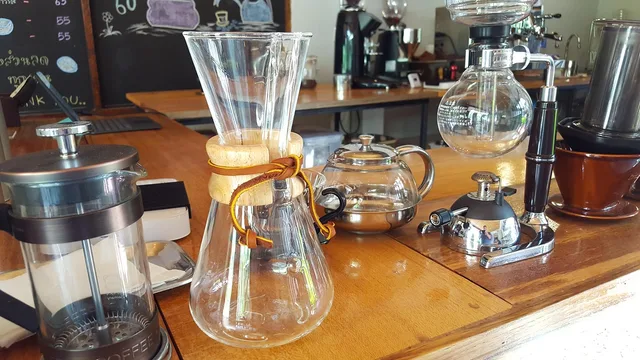
- Cone and immersion brewers, in one or two sizes, not eight.The Hario V60 02 dripper is about $10 in plastic and $25 in ceramic. The AeroPress Original lists at $39.95, the Clever Dripper at about $25, and a 34 oz Bodum Chambord French press at about $40.
- Kettles last.The most visible item and the least decisive one. The Fellow Stagg EKG, about $165, gives variable temperature and a gooseneck spout. The OXO Brew Adjustable Temperature kettle is about $100.
Questions your staff should be able to answer
One question covers most counter conversations: does your coffee taste sour and thin, or drying and harsh?
Sour and thin means under-extracted, so grind finer or brew longer. Drying and harsh means over-extracted, so go coarser or shorter.
Staff who run that exchange in thirty seconds sell more grinders than a display does, and the customer leaves with something that works.
The second question is what they brew with now. Someone using a supermarket blade grinder does not need a better kettle. Ask how many cups a day they make, because that decides between a single-cup dripper and a batch brewer.
What not to stock
Avoid gear that only makes sense inside a system you do not carry, such as capsules for a machine you do not sell. Single-use accessories earn little and clutter the shelf. Anything whose value rests on a claim you cannot verify stays off it.
Avoid eight brewers that do the same thing. A product pitched as removing the need to pay attention brings the customer back unhappy and blaming the shop.
If a customer wants a recommendation you cannot honestly give, hand them a method instead of a product. Point them at a way to compare two options at home and let their kitchen settle it.
Be straight too about what each step up in price actually buys, because a customer who feels oversold does not return.