Reviews
Part of How to build a home coffee budget around cost per cup
5 parts of home brewing costs, explained
Home brewing costs break down into five parts, including beans, grinder, brewer, water and the small consumables that quietly add up every month.
Home brewing costs split into five parts: beans, grinder, brewer, water and consumables. Beans are the visible line, the one you notice at checkout. Three of the other four leak money quietly, month after month.
What to take away
- Home brewing costs fall into five partsbeans, grinder, brewer, water and consumables.
- Beans are the only part you rebuy every week, so they dominate the yearly total.
- The grinder is the one purchase where spending more changes the cup in a way you can taste: hand grinders start near $60, electric burr grinders near $200.
- Water treatment costs a few cents per liter and protects every other part.
- Filters, descaler and cleaning powder are small line items that add up over a year, typically $60 to $120.
Part one: the beans
Beans are the recurring cost, so price them first. Cost per cup is the bag price divided by the bag weight, then multiplied by your dose in grams. Write down your bag price, bag weight and dose, and you have the yearly bean figure before you buy anything else.
Bean cost per cup
- $18340 g bag price
- 18 gdose per cup
- 18 cupsper bag
- $1cost per cup
Counter Culture and Onyx Coffee Lab sell 12 oz (340 g) bags in the $16 to $22 range. A 1 lb (454 g) supermarket bag from Starbucks or Peet's usually runs $10 to $16. At $18 for 340 g dosed at 18 g, you get about 18 cups, close to $1 each.
Roast date drives value more than origin does. Beans past three weeks old lose the aromatics you paid for, so a cheap stale bag is the expensive option. Store sealed, away from light and heat.
Part two: the grinder
The grinder sets the ceiling on everything downstream. Burr geometry, alignment and retention decide whether two consecutive shots or pours taste the same.
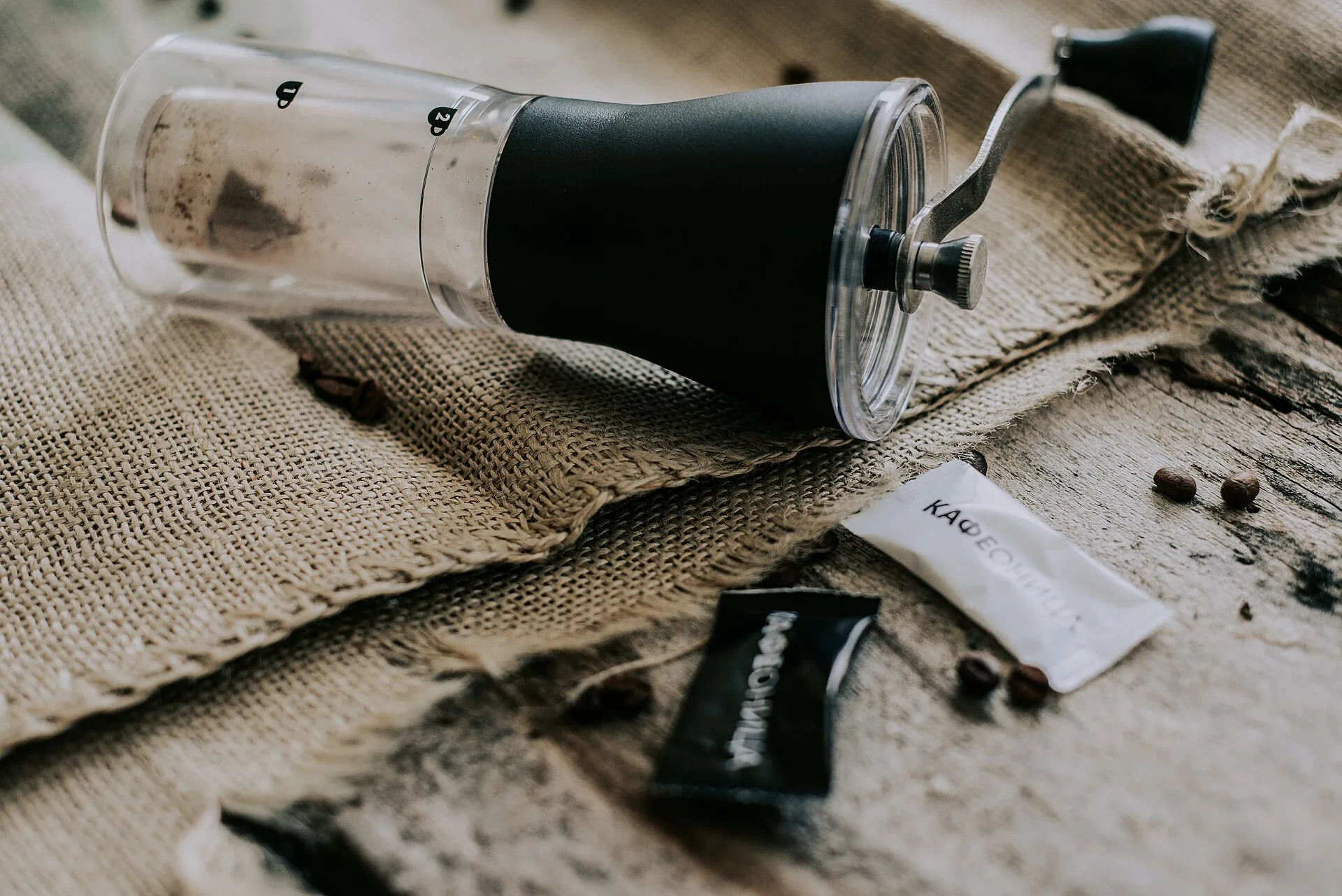
Hand grinders cost less and hold alignment well. The Timemore C2 typically sells for $60 to $90, and the 1Zpresso JX-Pro near $150. Powered compact grinders trade price for speed and repeatability.
Electric burr grinders start around $200 with the Baratza Encore ESP. The Fellow Ode Gen 2 runs about $345, and a Niche Zero lands near $700 to $800 in the US. This is the part where an upgrade is detectable in the cup.
Before you spend, run the free tests in a beginner guide to tasting compact coffee grinders. Grinding beans straight from the freezer narrows the particle size distribution, and work on roasted coffee found that grinding cold produced a narrower distribution and a smaller mean particle size.
Part three: the brewer
Brewer geometry changes how evenly the bed extracts. Modeling of flow through packed coffee beds found that non-uniform flow in a truncated cone caused significant variation in local extraction compared with a cylindrical bed.
That makes the brewer a real cost line rather than a container. A plastic Hario V60 02 dripper costs about $10 and the ceramic version about $25. A Kalita Wave 185 in stainless runs about $35, a Chemex 6-cup about $45, and an AeroPress Original about $40.
Electric batch brewers cost more: the OXO Brew 8-Cup sells around $200 and the Technivorm Moccamaster KBGV Select around $360.
A flat-bottomed basket and a cone behave differently at the same grind, so owning both is owning two brewers. The Kalita Wave and the Fellow Stagg X are flat-bottomed. The Hario V60 and the Chemex are cones.
Compact counter space is the constraint. Measure your shelf before you buy, because a brewer that does not fit gets stored and stops earning.
Part four: water
Water is the cheapest part and the one most often skipped. Filtered water removes chlorine and controls scale, which protects the brewer and keeps extraction consistent.
A Brita pitcher costs $25 to $40, and each replacement filter $8 to $10 for about 40 gallons (150 liters). That is roughly 6 cents per liter. A ZeroWater pitcher with a filter sells in the same range.
Third Wave Water sachets cost about $1.50 per gallon when mixed with distilled water. Descaler costs more per use but runs a few times a year. If your tap water is very hard, the filter pays for itself in brewer lifespan.
Part five: consumables
Filters, cleaning powder, descaler, storage bags and the occasional replacement gasket. None of these feel like brewing costs until you total them.
| Item | Rebuy rhythm | What it protects |
|---|---|---|
| Hario V60 size 02 paper filters, 100 count | Weekly to monthly | Cup clarity |
| Urnex Cafiza cleaning powder, 20 oz | Monthly | Burr and basket life |
| Urnex Dezcal descaler, 8 oz | Two to four times a year | Brewer and kettle |
| Airscape or Fellow Atmos storage canister | As needed | Roast freshness |
| AeroPress replacement seal | Yearly, or when it hardens | Pressure and seal |
Hario V60 size 02 filters cost about $10 for 100. Urnex Cafiza cleaning powder runs about $18 for 20 oz, and Urnex Dezcal descaler about $10 for 8 oz. An Airscape or Fellow Atmos canister sells for $30 to $40, and an AeroPress replacement seal about $6.
Add the yearly total to the bean total. A year of filters, powder, descaler, bags and gaskets typically lands between $60 and $120. That figure is your real cost of home brewing, and it is the number to compare against a cafe.
Putting the five together
Write the five figures down once: beans per year, grinder, brewer, water per year, consumables per year. The beans line will be the largest in almost every case.
Two cups a day at roughly $1 a cup is about $700 a year in beans. Consumables add $60 to $120, water a few dollars, and the grinder and brewer are one-time costs.
That is the same conclusion an honest cost per cup calculation reaches from the other end, and it is why the cheap habits deserve a serious trial first.
If you want to compare two setups side by side, build a tasting flight around small coffee bar ideas and hold everything except one variable still.
Common questions
Which of the five costs the most over a year?
Beans, by a wide margin. You rebuy them every week while the grinder and brewer are one-time purchases. Water and consumables sit in between.
Is the grinder worth more than the brewer?
Usually yes. The grinder controls particle distribution, which affects every brew. The brewer shapes flow, which matters but is a smaller lever. A $150 hand grinder changes more than a $360 batch brewer.
Do I need filtered water?
Check your local water report first. If it is hard or heavily chlorinated, a jug filter is cheap insurance for the brewer and the cup. Brita filters treat about 40 gallons for $8 to $10.
How do I track consumables?
Keep the receipts for one month and multiply. Filters, cleaning powder and descaler are predictable once you see the rhythm.